Septic tank cleaning vs. pumping can be confusing for homeowners. Although the terms are often used interchangeably, professional septic tank pumping removes the sludge and solids that accumulate inside the tank over time.
Many homeowners searching for a septic tank cleaning service are actually looking for professional pumping. Regular pumping is an important part of septic maintenance and helps prevent excess solids from causing problems with the system.
Sterling Septic & Plumbing LLC provides septic pumping, inspections, and septic tank repairs throughout Pierce, Thurston, and King Counties.
But how often should you schedule pumping? What happens during the process? And how does pumping differ from a septic inspection?
Let us take a closer look.
What Is Septic Tank Cleaning?
A septic tank is designed to separate wastewater into different layers.
Heavier solids settle toward the bottom and form sludge. Lighter materials, including fats and grease, can float near the top and form a scum layer. The liquid wastewater in the middle flows out of the tank toward the drain field.
The solids that collect in the tank do not simply disappear.
Over time, they build up and reduce the available space inside the tank. If too much sludge accumulates, solids can move out of the tank and into the drain field, potentially contributing to system problems.
That is why homeowners need periodic professional service.
When people say “septic tank cleaning,” they are often referring to having these accumulated solids removed from the tank through professional pumping.
In other words:
Septic tank cleaning is commonly used as a general term, while septic tank pumping describes the actual process of removing accumulated solids and sludge from the tank.
Is Septic Tank Cleaning the Same as Septic Tank Pumping?
For homeowners, the terms are often used interchangeably.
However, septic tank pumping is the more precise term for removing the accumulated contents of a septic tank.
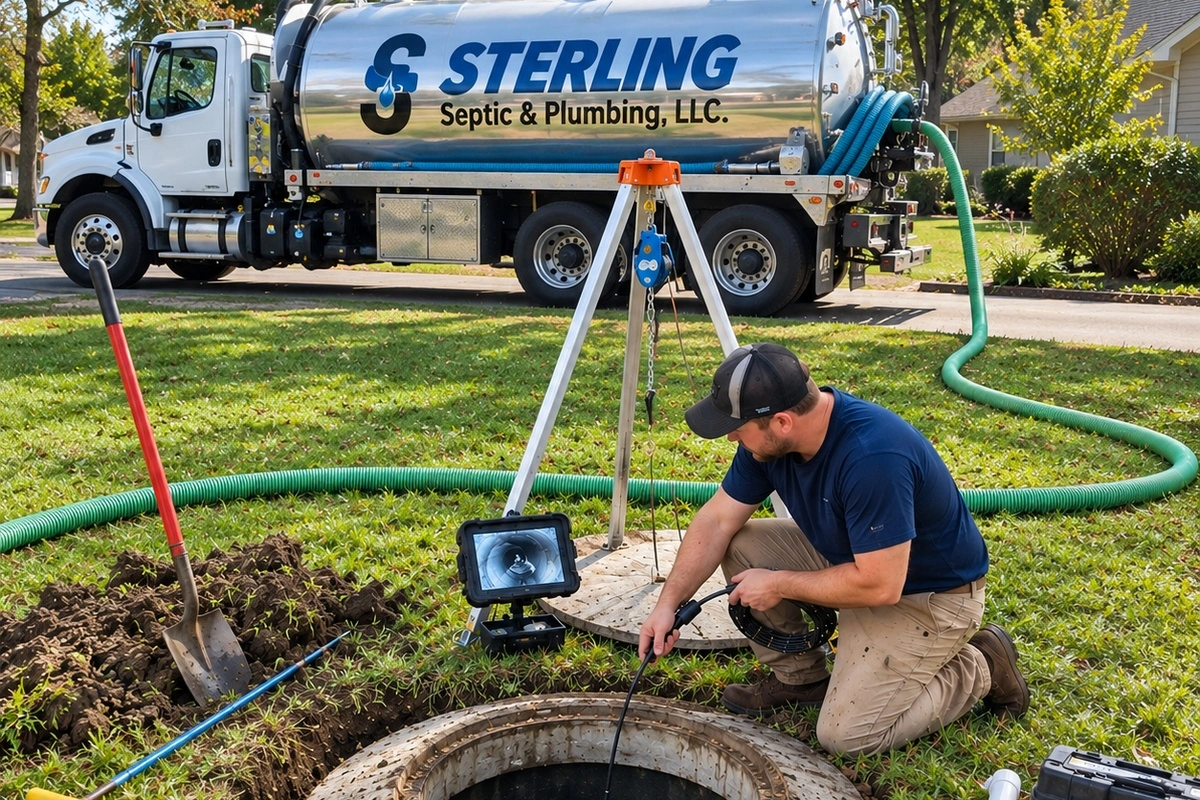
During a pumping service, a septic professional locates and accesses the tank, connects specialized pumping equipment, and removes the accumulated material.
Sterling’s pumping process includes locating and exposing the septic system when necessary, setting up the pumping equipment, pumping out the tank, and documenting the completed service. Sterling says a standard septic pumping service typically takes about 45 minutes, although the actual time can vary depending on the property and system.
So if you searched for septic tank cleaning near me, you may actually be looking for a professional septic pumping service.
Why Does a Septic Tank Need to Be Pumped?
Your septic system is constantly receiving wastewater from your home.
Every time you flush a toilet, run a shower, wash clothes, or use a sink, wastewater enters the system.
The liquid portion eventually leaves the septic tank, but the solids remain behind.
That is the part homeowners need to pay attention to.
As sludge accumulates, the tank has less room to hold incoming wastewater. If the sludge layer becomes excessive, solids can move toward the outlet and potentially enter the drain field.
Washington’s Department of Ecology recommends regular septic maintenance and advises homeowners to pump their tanks every three to five years as a general maintenance guideline, while recognizing that individual systems may require a different schedule.
Sterling also explains that pumping frequency depends on factors such as tank size, household size, and how the system is used.
That means there is no universal date that works for every home.
How Often Should a Septic Tank Be Cleaned or Pumped?
A common starting point for residential systems is every three to five years, but your actual schedule may be shorter or longer.
Several factors affect how quickly solids accumulate:
- Number of people living in the home
- Septic tank size
- Household water usage
- Amount of wastewater produced
- Garbage disposal use
- What goes down your drains
- Condition of the septic system
- Previous pumping and maintenance history
For example, a two-person household with a large septic tank may not need the same pumping frequency as a household with five or six people using a smaller tank.
Sterling’s own guidance notes that some systems may require pumping more frequently while others may go longer between services depending on household and tank conditions.
The best approach is to keep a record of previous pumping dates and have your system evaluated when you are unsure about the appropriate schedule.
What Happens During Septic Tank Pumping?
If you have never had your septic tank pumped, you may wonder what actually happens when the technician arrives.
1. The Tank Is Located
If you already know where your septic tank is, this step can be relatively simple.
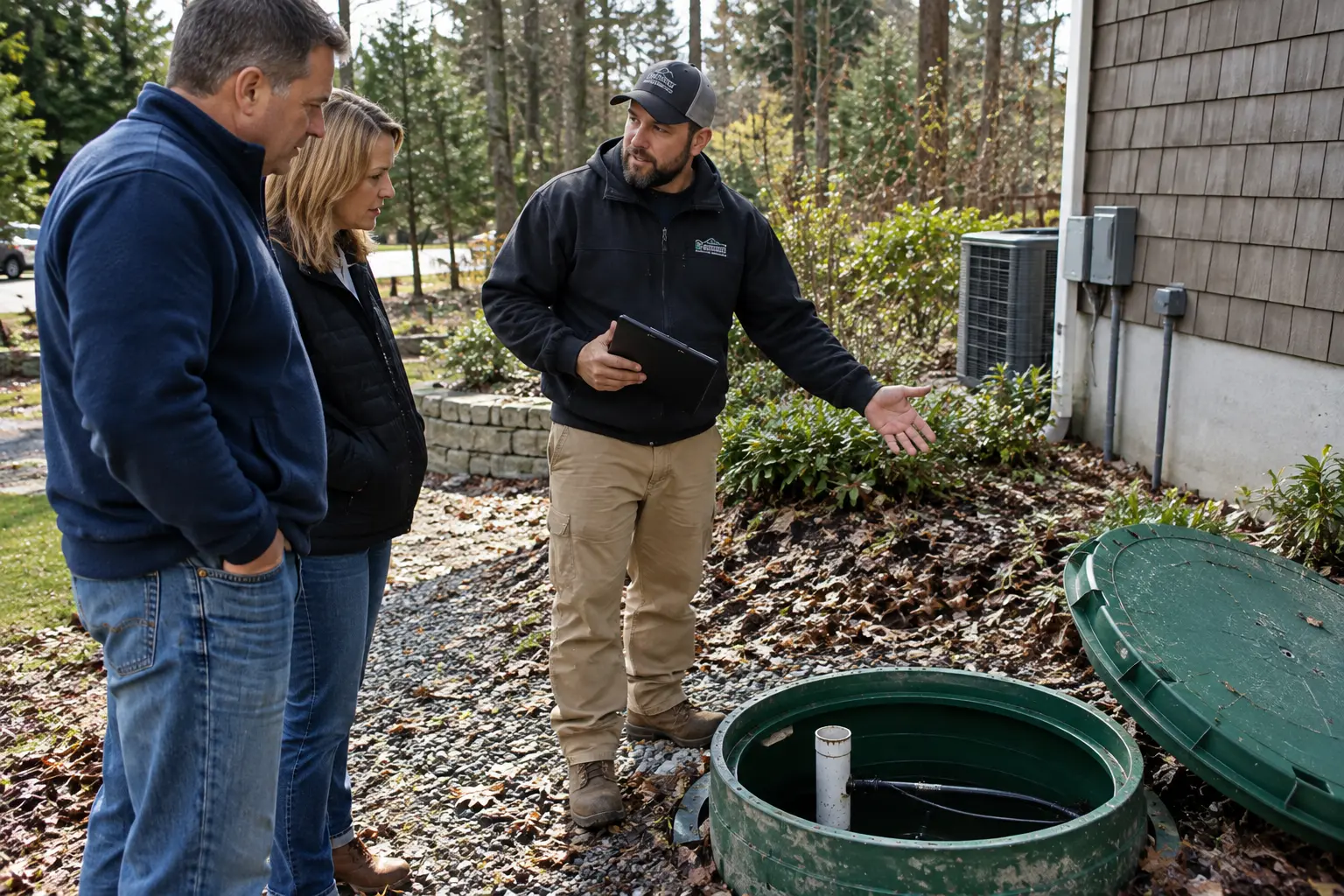
If the location is unknown, the technician may need to locate it before pumping can begin. Sterling explains that its technicians use probing techniques to locate septic systems while attempting to minimize unnecessary disturbance to the property.
2. The Tank Is Accessed
The technician needs appropriate access to the septic tank before the pumping equipment can be connected.
If the tank is buried, access may require exposing the tank.
3. The Tank Is Pumped
A vacuum hose is connected to the pumping equipment, and the accumulated contents are removed from the tank.
This is the step most homeowners are referring to when they search for septic tank cleaning.
4. The System Is Checked
Professional septic service can also provide an opportunity to identify visible concerns or conditions that may need further attention.
Sterling documents the condition of the septic system as part of its pumping service.
5. The Service Is Completed
After pumping is finished, the equipment is removed and the work area is addressed.
The exact process can vary depending on the tank, property, access, and system configuration.
Signs Your Septic Tank May Need Pumping
You do not always have to wait for a major backup before considering septic service.
Some warning signs include:
Slow Drains Throughout the House
One slow sink may be a plumbing clog.
But when several drains throughout the home begin slowing down, your septic system may need attention.
Gurgling Toilets or Drains
Gurgling can occur when wastewater or air is not moving through the system normally.
It should not be ignored if it is persistent or accompanied by other symptoms.
Persistent Septic Odors
Strong sewage odors around the tank, drain field, or inside the home may indicate a problem that deserves professional attention.
Wet Areas in the Yard
Unexpected wet or soggy areas around the septic system can be a warning sign, particularly when there has not been recent rainfall.
Recurring Backups
Repeated backups should never be treated as something that simply needs to be ignored until the next pumping appointment.
A backup can have several possible causes, including a full tank, blockage, filter issue, plumbing problem, or drain field problem.
Sterling identifies slow drains, odors, gurgling, ponding, and backups among signs that homeowners should take seriously.
Does a Full Septic Tank Mean It Needs Cleaning?
Not necessarily.
This is an important distinction.
A septic tank normally contains liquid. After pumping, the tank does not remain empty. Wastewater begins entering again as soon as the household uses its plumbing.
Sterling explains that after pumping, a septic tank can naturally refill with water, and that this is normal. What matters is the amount of solids accumulating and whether the system is operating properly.
A tank that appears “full” may therefore be functioning normally.
On the other hand, an unusually high liquid level can indicate a problem such as a clogged filter, blocked outlet, drain field issue, or other system problem.
That is why homeowners should not automatically assume that every full-looking septic tank simply needs to be pumped.
Septic Tank Cleaning vs. Septic Inspection
Another common source of confusion is the difference between septic tank cleaning and septic inspection.
They are not the same service.
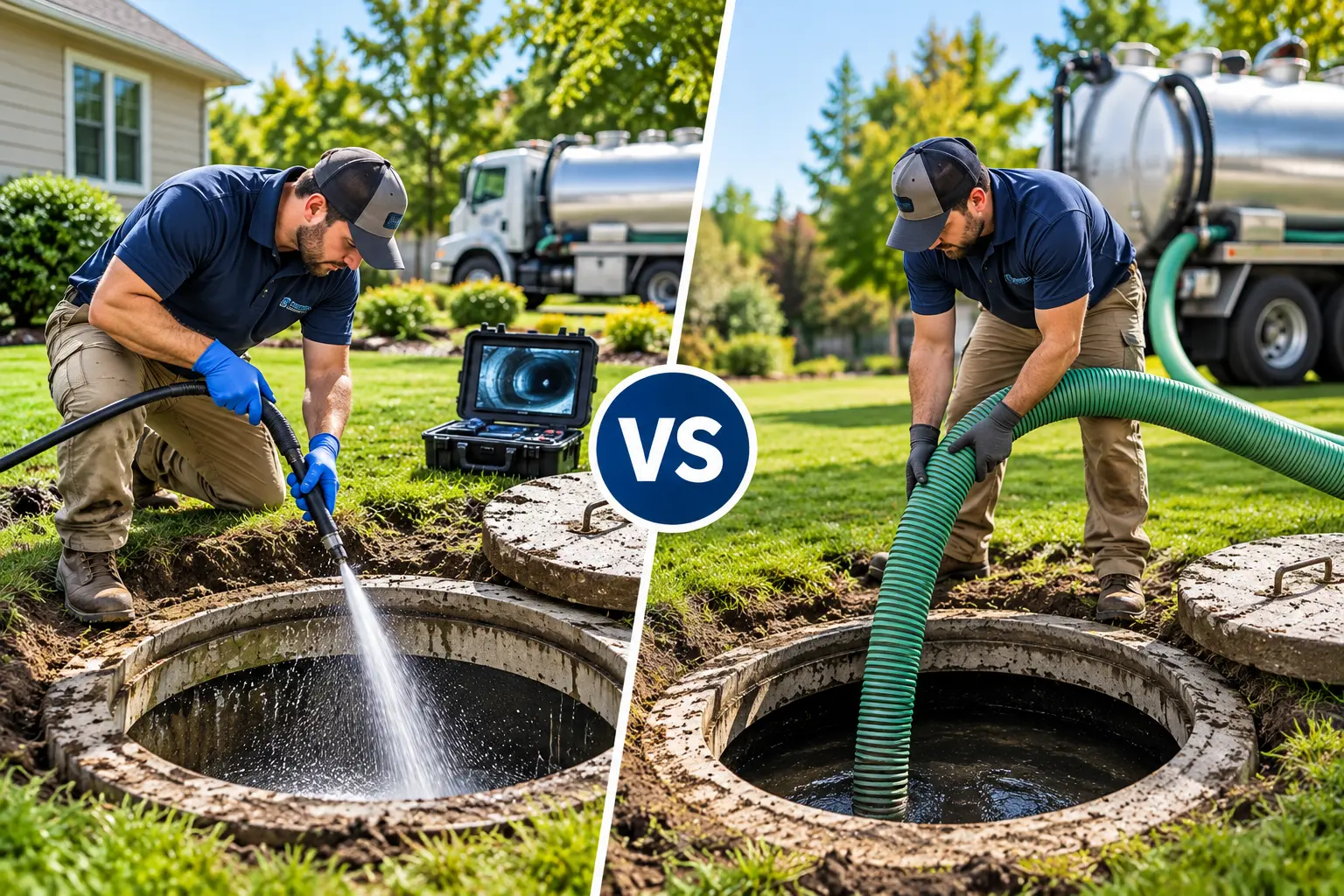
Septic Tank Pumping
Pumping removes accumulated solids and sludge from the septic tank.
Septic Inspection
An inspection evaluates the condition and operation of the septic system.
Depending on the system, an inspection may involve checking:
- Septic tank condition
- Tank lids
- Baffles
- Filters
- Liquid and solids levels
- Distribution components
- Drain field
- Other accessible components
Sterling’s inspection service explains that pumping and inspection serve different purposes. A tank can be pumped and still have a problem somewhere else in the septic system.
Think of it this way:
Pumping removes accumulated material.
Inspection looks for problems.
You may need one or both depending on the condition of your system.
Does Septic Pumping Clean the Entire Septic System?
No.
This is another important point for homeowners.
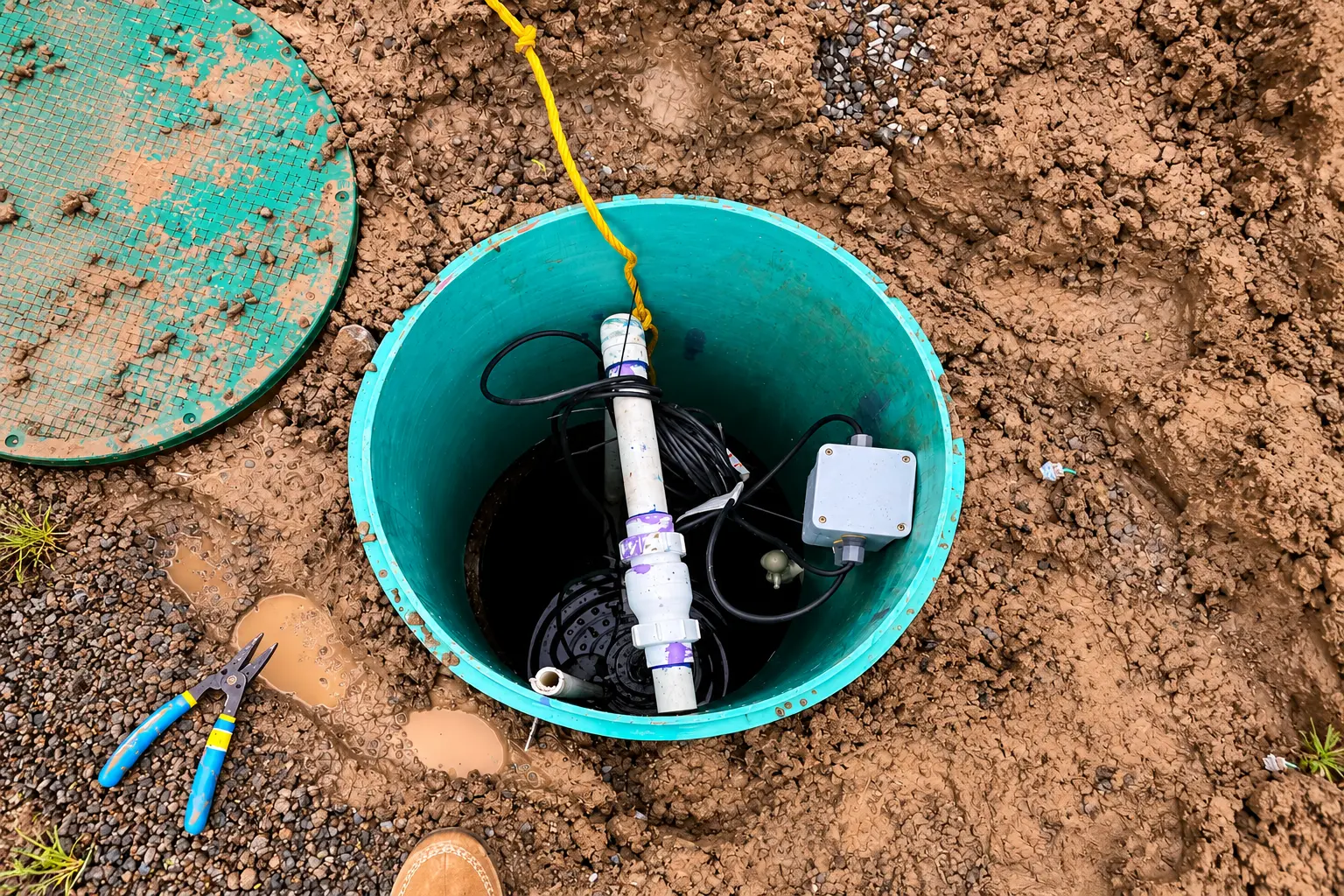
The septic tank is only one part of an onsite sewage system.
The system can also include:
- Pipes
- Effluent filters
- Pumps
- Distribution components
- Drain field
- Electrical components
- Other treatment components
Pumping removes accumulated solids from the tank, but it does not automatically repair a damaged pump, clean a failing drain field, or fix a blocked pipe.
Washington Department of Ecology emphasizes that septic systems need ongoing inspection and maintenance, not just occasional pumping.
If your system is showing signs of a problem, a professional inspection may be necessary in addition to pumping.
Can Septic Tank Cleaning Prevent Septic Problems?
Regular pumping is an important part of septic maintenance, but it is not the only thing your system needs.
A properly maintained septic system also benefits from:
- Regular inspections
- Appropriate water usage
- Proper disposal of household waste
- Protecting the drain field
- Addressing leaks and plumbing problems
- Maintaining filters and other components
- Keeping accurate maintenance records
Washington Department of Ecology recommends regular septic maintenance and notes that preventing excessive solids from reaching the drain field is important for protecting system performance.
The goal is not simply to pump the tank whenever there is a problem.
The goal is to keep the entire septic system functioning properly.
What Should You Avoid Putting Into a Septic System?
What goes down your drains can affect how your septic system performs.
Homeowners should be careful about putting materials into toilets and drains that the system was not designed to handle.
Avoid flushing or pouring things such as:
- Grease and cooking oil
- Wipes that are not designed to break down easily
- Paper towels
- Feminine hygiene products
- Medications
- Harsh chemicals
- Non-degradable materials
- Excessive food waste
Washington Department of Ecology specifically advises homeowners to avoid putting grease, medications, toxic chemicals, and other inappropriate materials into septic systems.
When in doubt, check the manufacturer’s guidance for your system or ask a septic professional.
How Much Does Septic Tank Cleaning Cost?
There is no single price for every septic tank cleaning service.
The cost can depend on:
- Tank size
- Tank location
- Accessibility
- Distance from the pumping truck
- Whether the tank needs to be located
- Amount of accumulated material
- Site conditions
- Additional work required
A property where the tank is easily accessible may require a very different amount of labor from an older property where the tank location is unknown.
Sterling notes that locating and exposing a septic tank can require additional work depending on the property. Its pumping trucks can carry up to 300 feet of hose, although the entire length is not always needed.
For that reason, homeowners should request a quote based on their specific property rather than relying on a generic online price.
Septic Tank Cleaning in Pierce, King & Thurston Counties
If you are searching for septic tank cleaning near me, you may be looking for professional septic pumping.
Sterling Septic & Plumbing serves homeowners throughout Pierce, Thurston, and King Counties, providing septic pumping, septic inspections, septic tank repairs, and home-sale inspections.
Sterling Septic & Plumbing LLC serves the Puyallup area and surrounding communities.
Because local septic requirements can vary, homeowners should also check with the applicable county environmental health authority for inspection and maintenance requirements for their specific system.
When Should You Call a Septic Professional?
You do not have to wait for a sewage backup before getting professional help.
Consider scheduling septic service if:
- You cannot remember when your tank was last pumped
- It has been several years since your last pumping
- Multiple drains are slowing down
- Toilets or drains are gurgling
- You notice persistent septic odors
- Your yard has unexplained wet areas
- You experience recurring backups
- You are preparing to sell your home
- You are unsure about your septic system’s condition
If you are not sure whether you need septic tank cleaning, septic pumping, an inspection, or repair, a professional can help determine what your system actually needs.
Keep Your Septic System Ahead of the Problem
Most homeowners do not think about their septic tank until something goes wrong.
That is understandable. The system is underground, out of sight, and usually works quietly every day.
But that is exactly why routine maintenance matters.
Septic tank cleaning is commonly used to describe removing accumulated material from the tank, while septic tank pumping is the specific service used to remove sludge and solids.
Knowing the difference can help you choose the right service.
More importantly, do not wait for sewage to back up into your home before paying attention to your septic system. Regular pumping, appropriate maintenance, and timely inspections can help identify problems before they become much larger repairs.
Need Septic Tank Pumping?
Sterling Septic & Plumbing provides professional septic pumping, septic inspections, and septic tank repairs throughout Pierce, King, and Thurston Counties.
If you are unsure when your tank was last pumped or think your septic system may need attention, Contact Sterling Septic & Plumbing LLC to discuss your system and schedule the appropriate service.
Frequently Asked Questions
Is septic tank cleaning the same as septic tank pumping?
The terms are often used interchangeably by homeowners. Septic tank pumping specifically refers to removing accumulated sludge and solids from the tank. Sterling provides professional septic pumping services.
How often should a septic tank be cleaned?
There is no single schedule for every system. Washington Department of Ecology recommends pumping every three to five years as a general guideline, while actual frequency depends on factors such as tank size, household size, and usage.
How do I know if my septic tank needs cleaning?
Slow drains, gurgling, persistent odors, wet areas, and recurring backups can indicate a septic problem. However, these symptoms can have different causes, so professional evaluation may be appropriate.
Does septic pumping include an inspection?
Not automatically. Pumping removes accumulated material from the tank, while an inspection evaluates the condition and operation of the septic system. Sterling treats these as separate services.
Can septic tank cleaning fix a septic problem?
It depends on the cause. Pumping can address excessive sludge accumulation, but it will not automatically fix problems such as a damaged pump, blocked pipe, failed drain field, or other system component.
How much does septic tank cleaning cost?
The cost varies depending on tank size, accessibility, location, accumulated solids, and whether additional work is needed. A professional quote based on your property is more useful than a generic online price.
Does Sterling Septic & Plumbing provide septic tank cleaning?
Sterling provides septic pumping, which removes accumulated solids and sludge from the septic tank. Sterling also provides septic inspections and septic tank repairs.