General Rule
Most septic tanks should be pumped every 3 to 5 years, but depending on household size, tank capacity, and usage, the need could range from every 6 months to every 10 years.
What Your Septic Tank Actually Does
A septic tank is a filter, not just a container. It:
- Separates solids from wastewater
- Holds solids while sending liquid to the drain field
- Works with soil bacteria to treat effluent underground
After pumping, your tank fills with water again in about a week—this is normal. What matters is how much solid waste is building up.
How Filtering Works
Septic tanks use baffles to control the flow of waste:
- Solids float or sink, leaving clearer water in the middle
- Baffles allow only this middle layer to pass through
- If solids accumulate too high, they can flow past the baffles and damage your system
When Is Pumping Needed?
Pump your tank when solids reach one-third the tank’s height. For a 48-inch tank, that means 16 inches or more of solids.
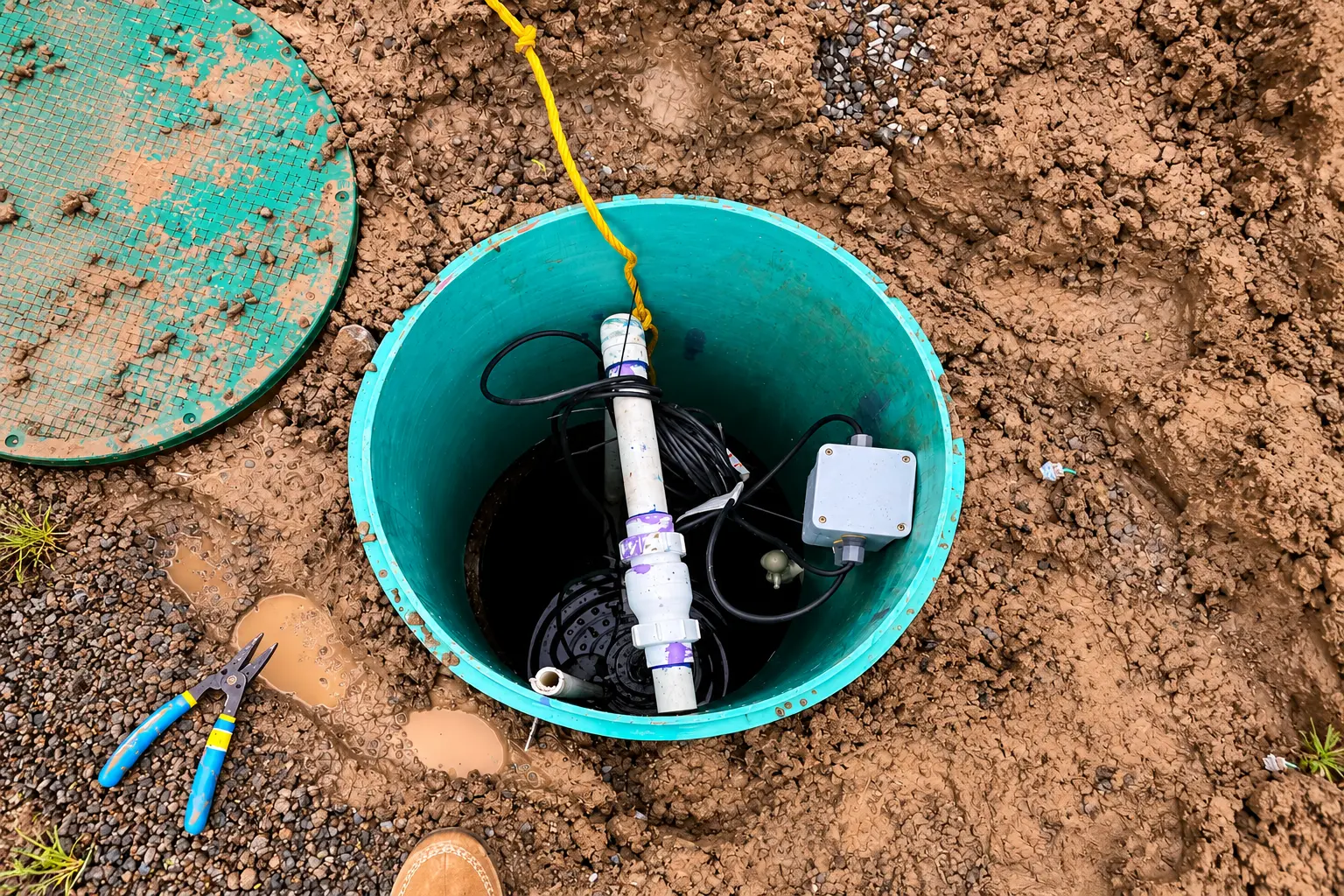
In a pump chamber (if present), pump when solids reach 2 inches or more.
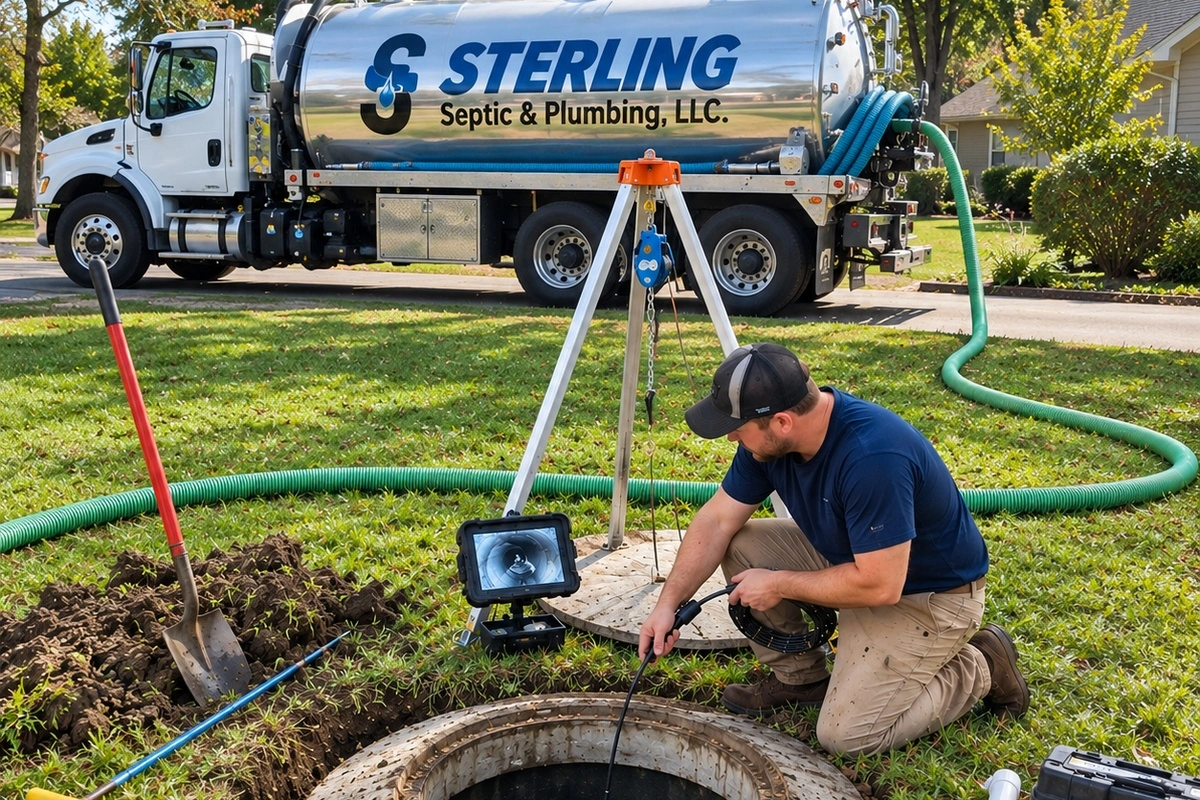
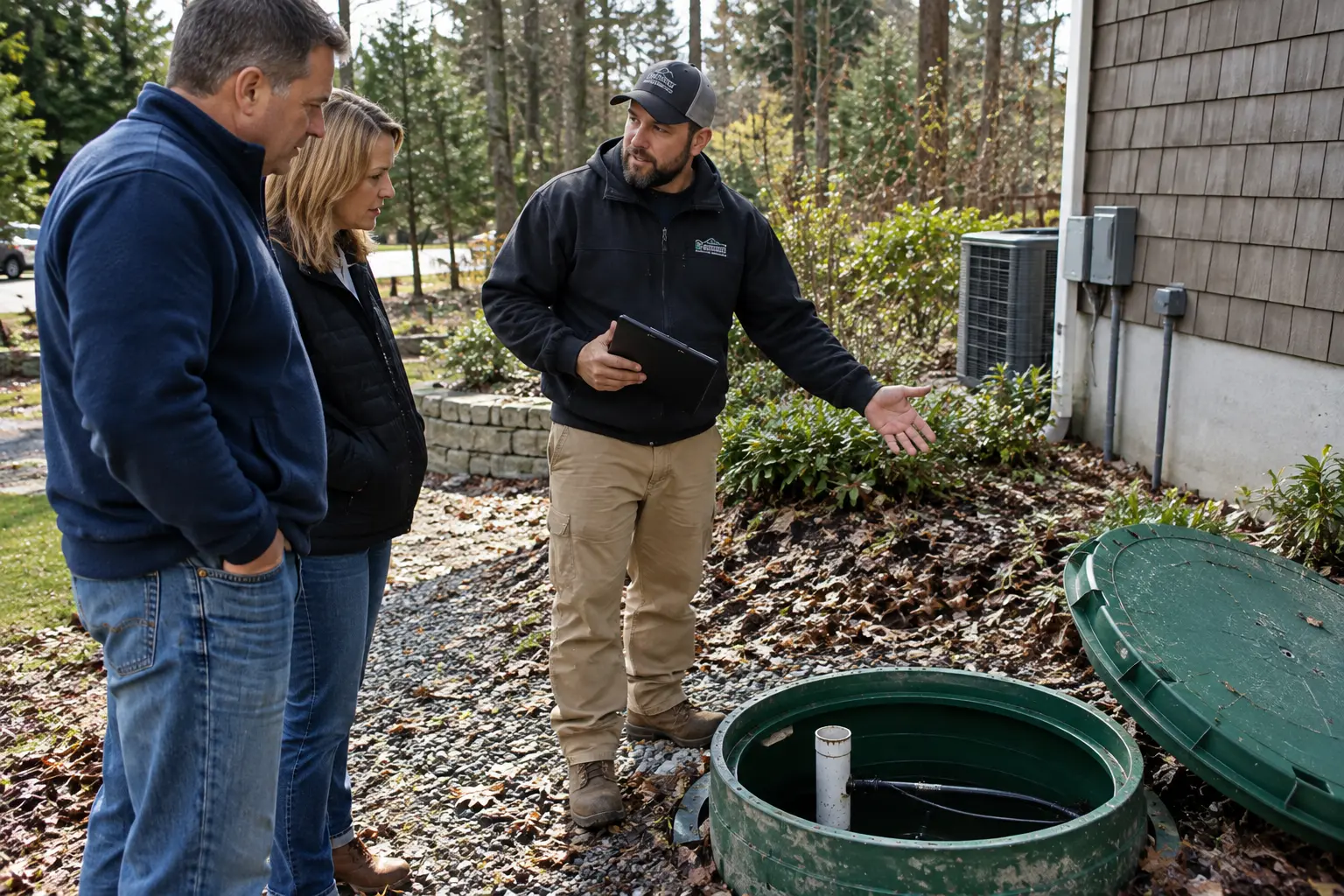
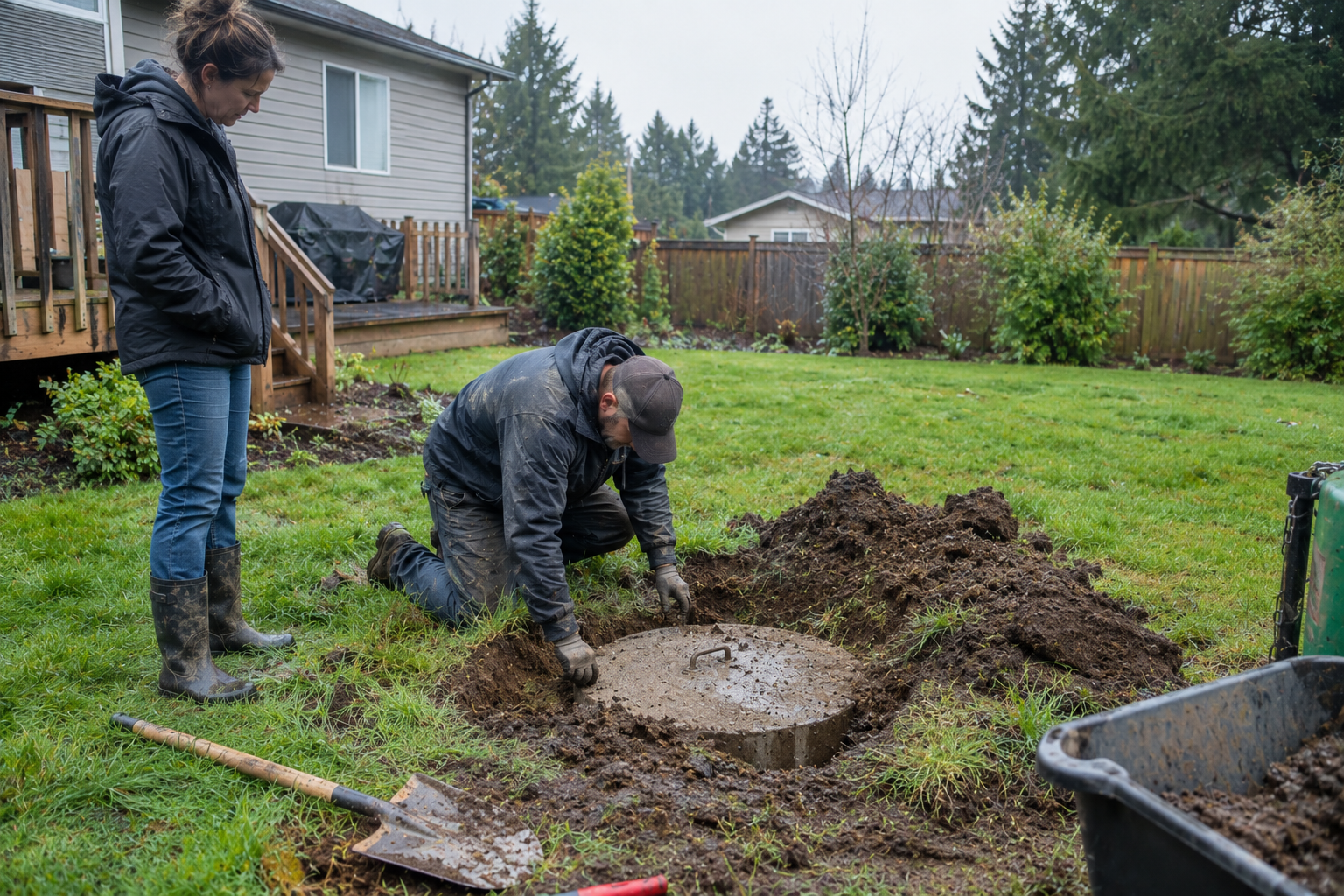
The only way to know is to have a professional open the lids and measure.
“Full” vs. “Due for Maintenance”
Full (Flooded):
- Liquid is above the normal operating level
- Indicates a system problem, such as a clogged filter, failed drain field, or blocked pipe
Due for Maintenance:
- Solids are nearing the maximum safe level
- The system is still working, but needs pumping to avoid future failure
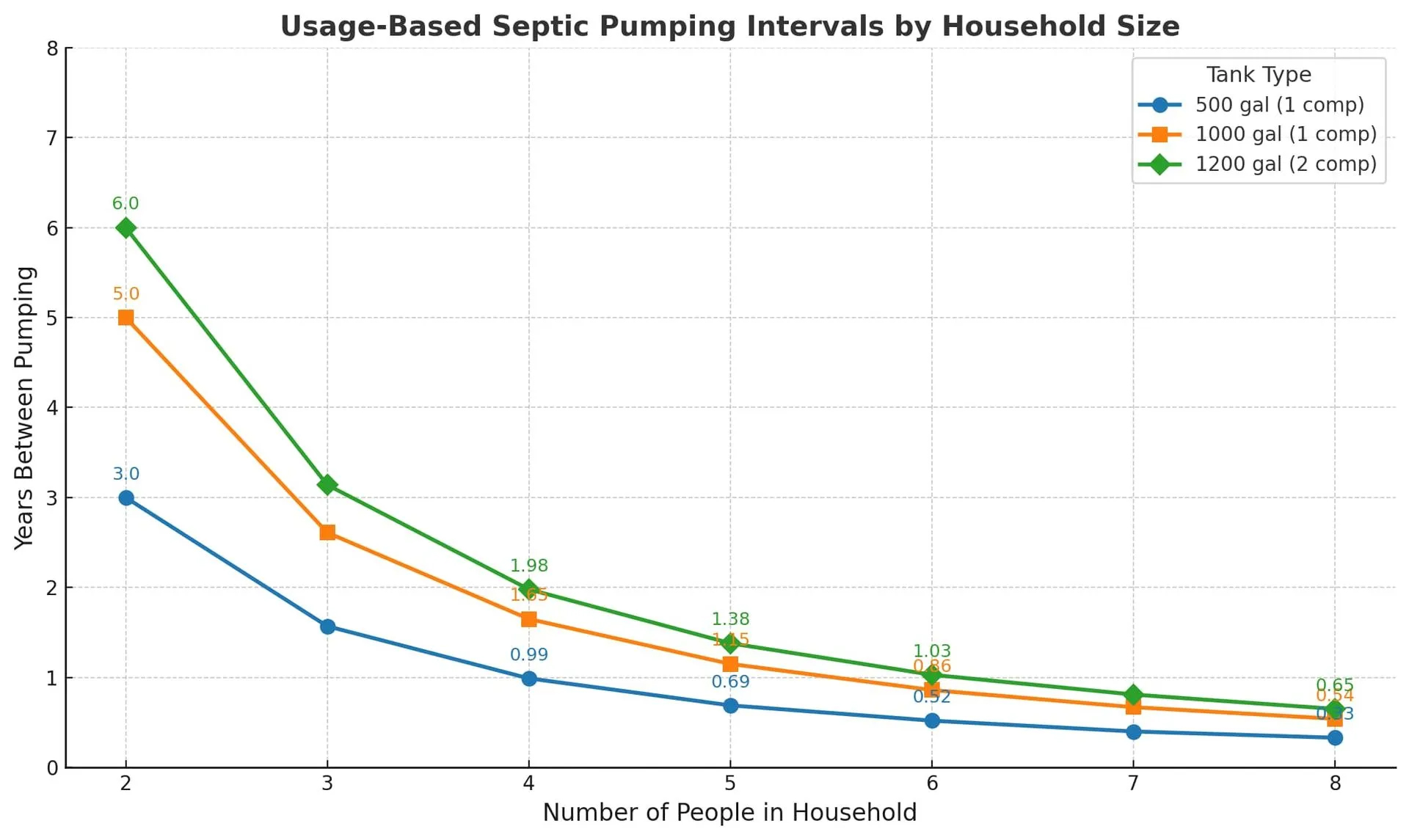
How Often Should You Pump?
Two key factors determine frequency:
- Tank Size
- Common sizes: 500–1200 gallons
- Smaller tanks require more frequent pumping
- Household Size
- More people = faster buildup
For a 1200-gallon, two-compartment tank:
| Household Size | Recommended Pumping Frequency |
|---|---|
| 2 | Every 6 years |
| 3 | Every 4 years |
| 5 | Every 2 years |
Final Advice
- Don’t rely on alarms, odors, or lawn conditions alone
- Schedule maintenance based on tank size and household usage
- Pump before solids reach critical levels
For reliable service and honest advice, contact Sterling Septic to inspect or maintain your system.
Frequently Asked Questions
Does my septic alarm tell me when it’s time to pump?
No. Alarms detect electrical or pump failures—not solids accumulation.
Do I really need to pump my tank?
Yes. Skipping pumping shortens the life of your system and risks expensive repairs.
Does green grass mean my tank is full?
It may mean the soil is oversaturated. It’s a sign to inspect your system.
What if my toilets are gurgling?
Check the tank first. Gurgling often points to septic or drainage issues.