You have found the right buyer. The home inspection is underway. You are already thinking about the move, the closing date, and what comes next.
Then the septic inspection report arrives.
There is a problem with the system.
For many homeowners, the first question is simple:
“Does this mean I need a completely new septic system?”
Not necessarily.
A septic system failed inspection result can point to anything from a repairable component problem to a more serious system failure. The important thing is to understand what actually failed, how serious the problem is, and what needs to happen next.
For homeowners in Pierce, King, and Thurston Counties, the process can also depend on the reason for the inspection and the requirements of the local health jurisdiction.
Here is how to approach a failed septic inspection without jumping to the worst conclusion.
What Does It Mean When a Septic System Fails an Inspection?
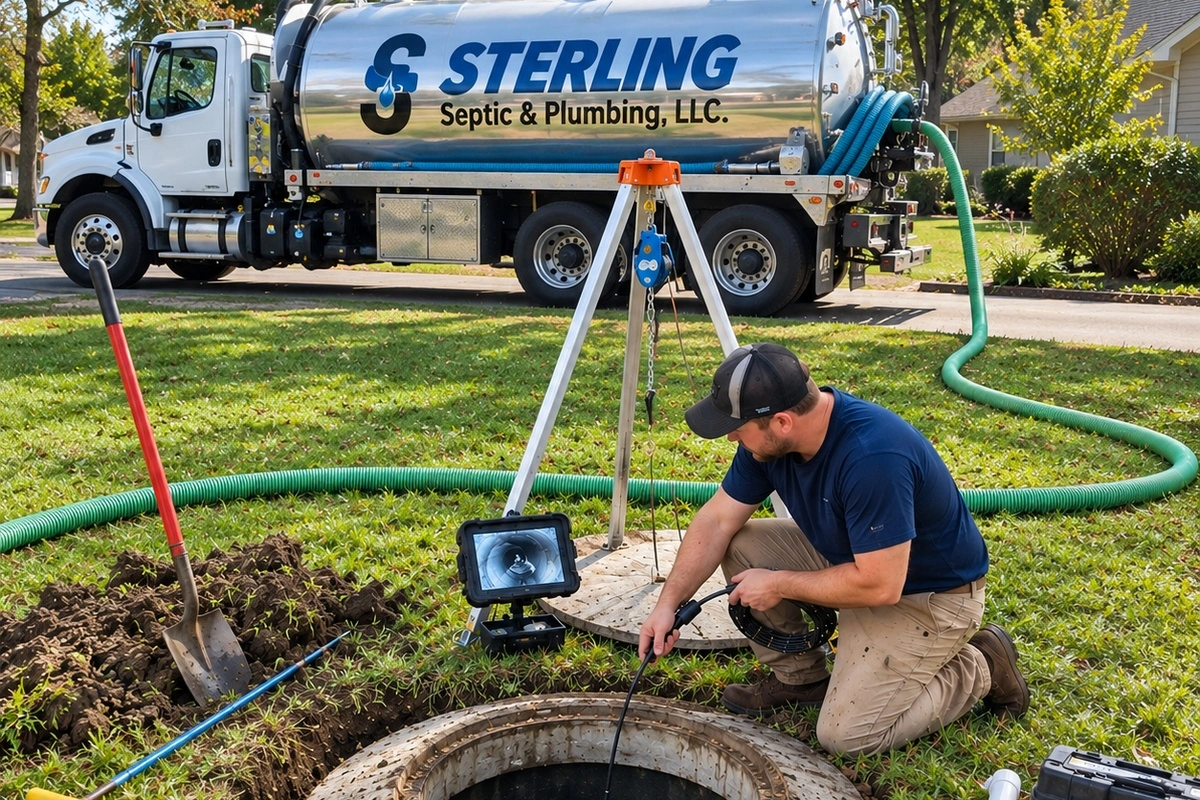
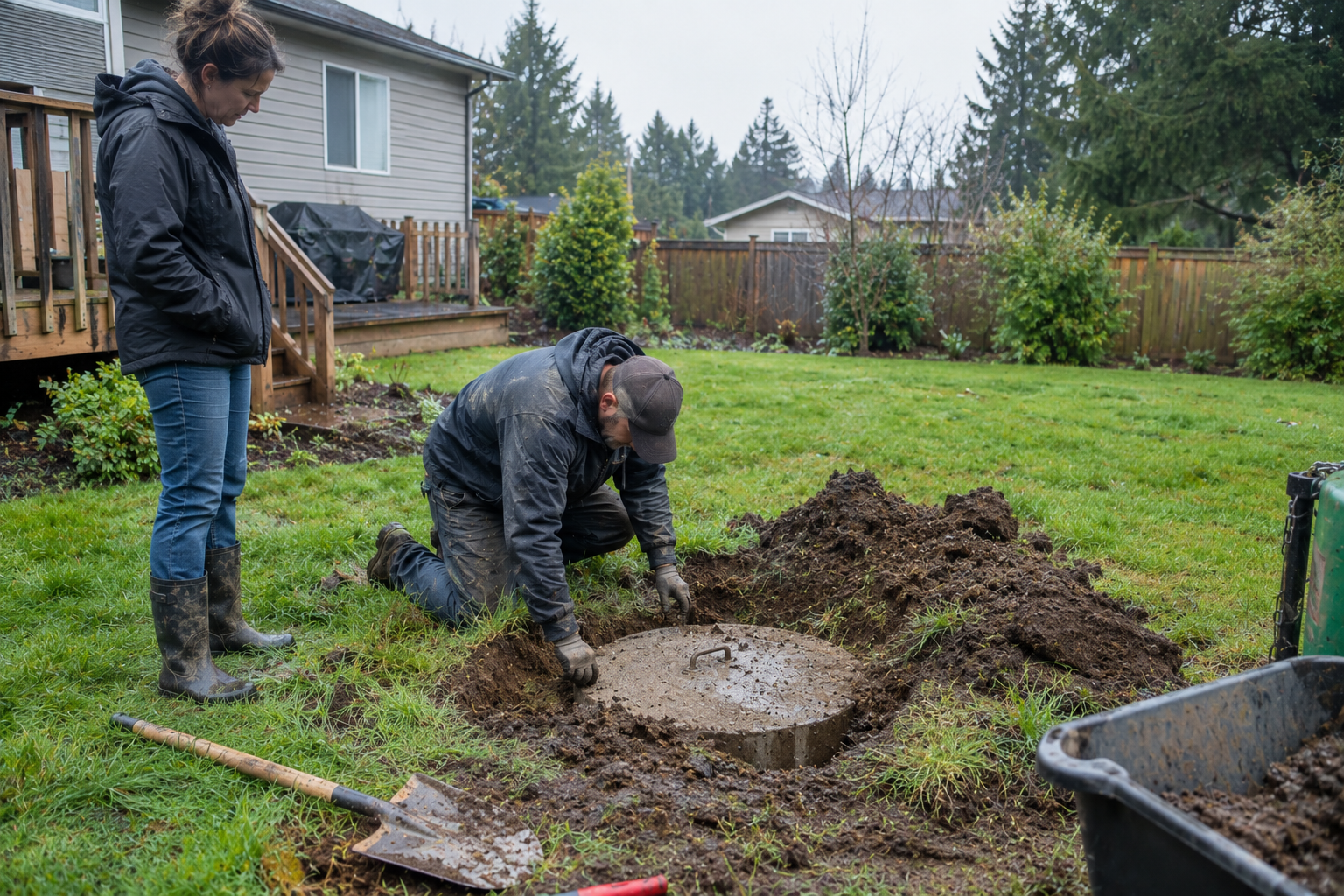
A septic inspection looks at the condition and operation of the system. Depending on the property and system, an inspection may involve the septic tank, pumps, distribution components, drain field, and other parts of the wastewater system.
A report may identify a minor deficiency, a condition that needs repair, or an actual system failure.
Those are not necessarily the same thing.
For example, a malfunctioning pump or damaged riser is a very different situation from sewage surfacing over the drain field. Thurston County specifically distinguishes between deficiencies that need attention and failures such as sewage backing up into a building, sewage surfacing, or a leaking sewage tank.
That is why the first step after a septic system failed inspection is not automatically ordering a replacement.
It is finding out exactly what the inspector found.
Why Do Septic Systems Fail Inspections?
There is no single reason a septic system can fail. The problem could be with one component or with the system’s ability to properly treat and dispose of wastewater.
Some common findings include:
Septic Tank Problems
The tank itself may have structural damage, leaks, or other conditions that affect its performance.
A professional may also find problems with components inside or around the tank.
Pump Problems
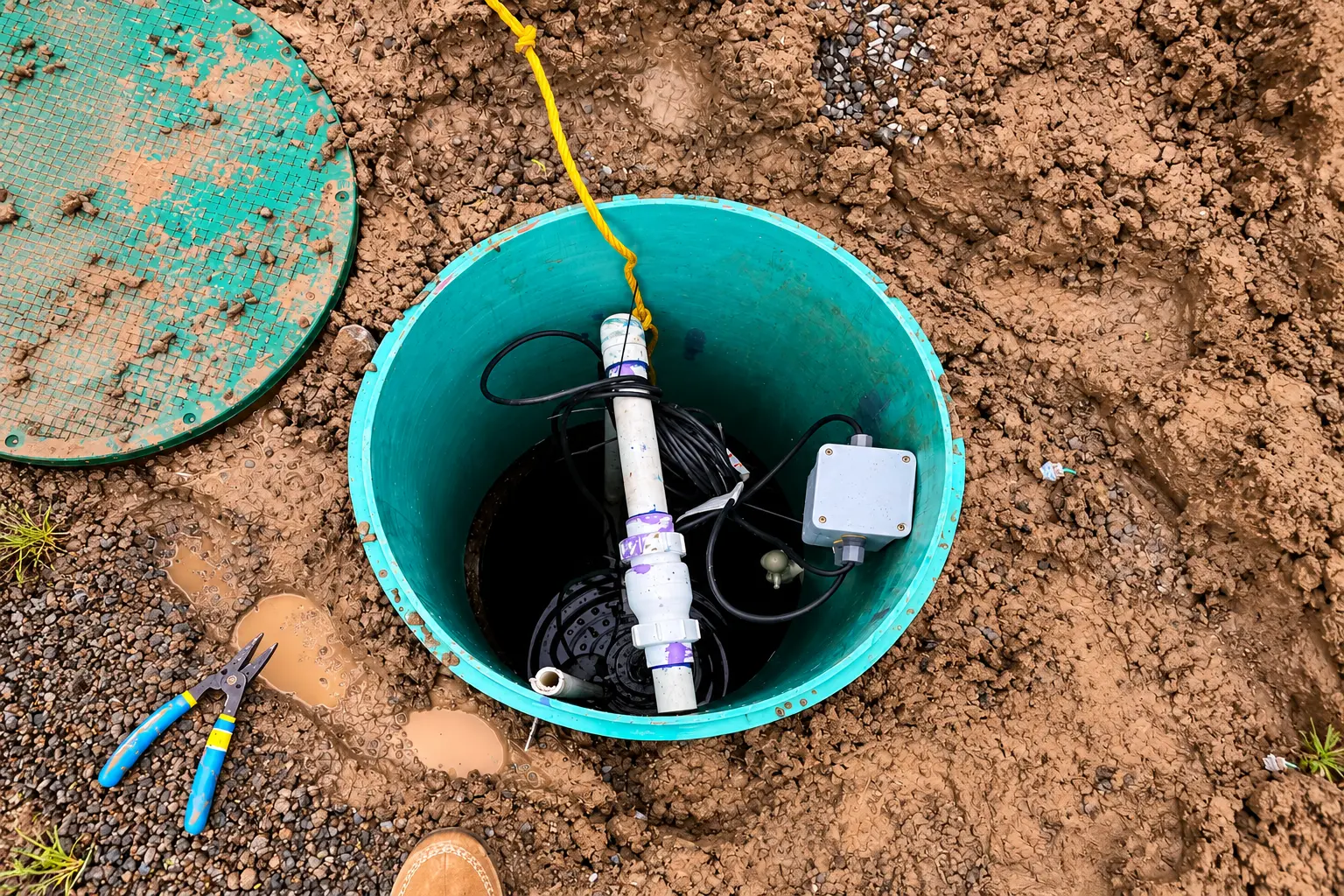
Some septic systems use pumps to move wastewater through the system. A malfunctioning pump can prevent wastewater from reaching the next stage of treatment or disposal.
Damaged Risers, Lids, or Access Components
A broken or missing component may need to be repaired even when the main tank and drain field are functioning properly.
These problems may sound serious on an inspection report, but they do not automatically mean the entire septic system needs replacement.
Drain Field Problems
The drain field is a critical part of the system. If wastewater cannot properly move into the soil, you may see signs such as wet areas, sewage surfacing, odors, or wastewater backing up.
A drain field problem can be more significant and may require additional evaluation.
Sewage Backup or Surfacing
Sewage backing up into the home or surfacing on the ground is a much more urgent concern. Washington’s Department of Ecology notes that failing septic systems can allow sewage to reach homes, groundwater, and surface water.
If you see these signs, do not treat them as a minor maintenance issue.
Does a Failed Septic Inspection Mean You Need a New System?
No.
This is probably the most important thing to understand.
A failed septic inspection does not automatically mean that the entire system needs to be replaced.
The appropriate solution depends on the specific problem.
Some Problems May Be Repairable
Depending on the system and inspection findings, repairs may involve things such as:
- Pump problems
- Damaged baffles
- Broken risers or access components
- Effluent filter problems
- Certain plumbing problems
- Other individual system components
For example, Thurston County states that some deficiencies, including malfunctioning pumps and broken baffles, may require attention without necessarily constituting immediate system failure.
Other Problems May Require Major Work
A more serious situation may involve:
- A failing drain field
- Significant tank damage
- Sewage surfacing
- Repeated backups
- A system that cannot adequately handle wastewater
- Conditions that make the existing system unsuitable for continued use
In these situations, a repair or replacement may be necessary.
The key is to diagnose the actual problem before deciding what work is needed.
What Should You Do After a Failed Septic Inspection?
If you have just received a failed inspection report, take it one step at a time.
1. Read the Inspection Report Carefully
Start with the actual findings.
Do not focus only on the word “failed.”
Look at what the inspector identified and whether the report describes a deficiency, repair, failure, or recommendation for additional evaluation.
2. Find Out What Actually Failed
Ask specific questions.
- Is the tank damaged?
- Is the pump working correctly?
- Is the effluent filter blocked?
- Is there evidence of sewage surfacing?
- Is the drain field functioning properly?
- Is the problem something that can be repaired?
- Does the system need additional testing?
Getting clear answers can prevent you from assuming that the worst-case scenario is already confirmed.
3. Have the Problem Evaluated
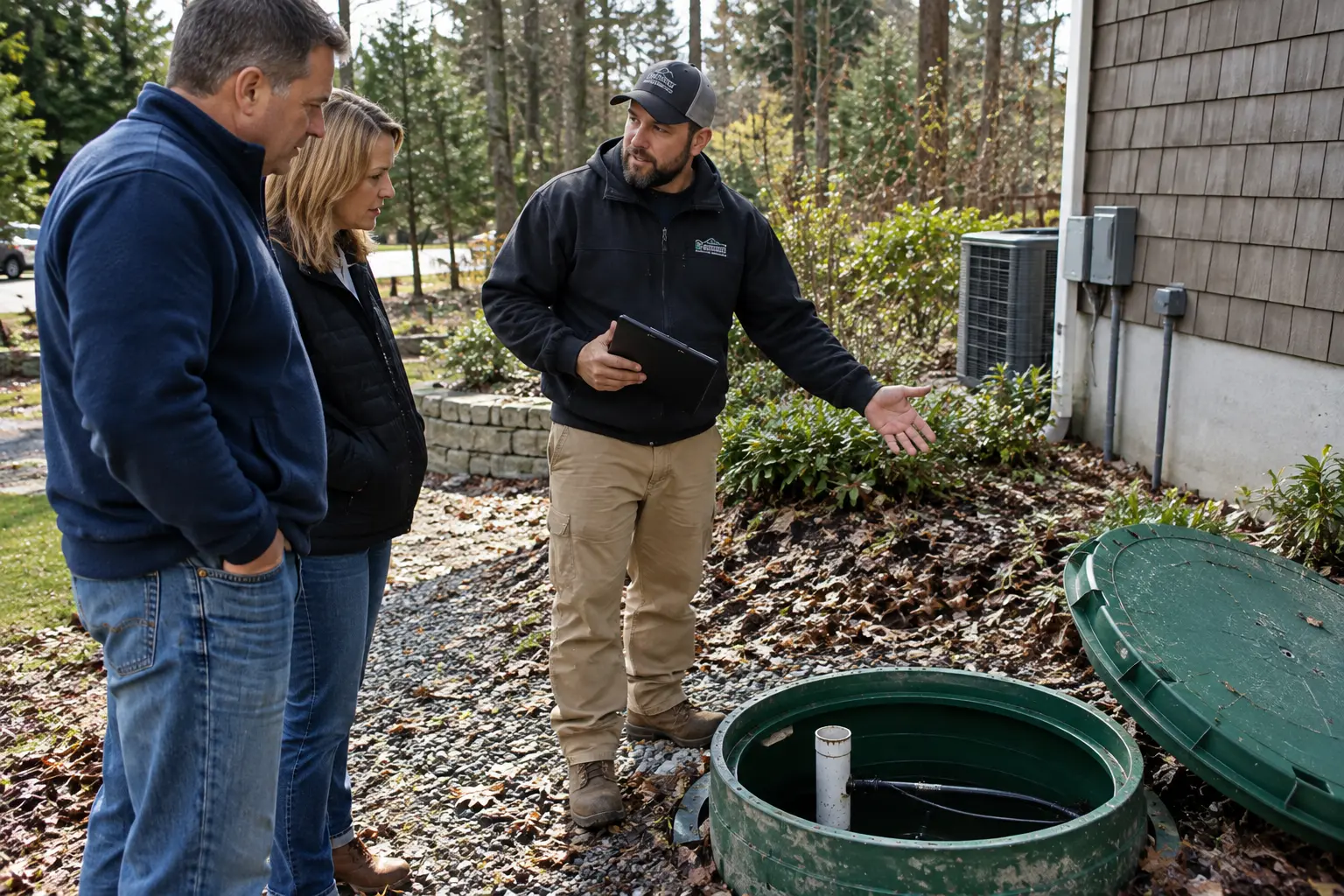
If the inspection identifies a significant issue, have the specific problem evaluated by an appropriately qualified septic professional.
This is particularly important before agreeing to expensive repair or replacement work.
Washington’s Department of Ecology recognizes that septic failures can require substantial repair or replacement work, but also notes that not every failure requires the same level of work.
4. Complete the Required Repair or Maintenance
Once the problem is understood, the next step is addressing it properly.
That might mean a relatively focused repair, or it could involve a larger project.
The solution should be based on the condition of the system rather than a guess.
5. Keep Your Documentation
Save:
- Inspection reports
- Pumping records
- Repair invoices
- Permits
- Maintenance records
- Follow-up inspection documents
These records can be especially important if the inspection is connected to a home sale.
What If the Septic Inspection Happens When You Are Selling Your Home?
This is where a septic problem can become stressful very quickly.
You may have a buyer waiting, a closing date approaching, and a repair that you were not expecting.
The good news is that the inspection gives you useful information. Instead of discovering a problem after closing, you now know what needs attention.
The exact requirements also depend on the county.
King County
King County requires properties with septic systems to be inspected by a certified on-site system maintainer before transfer of title, subject to specific exceptions. Sellers also have documentation requirements before closing.
Thurston County
Thurston County has a Time of Transfer process when selling a home with a septic system. The septic system must be pumped and inspected by a Thurston County-certified septic professional before the application is submitted.
If deficiencies are identified, Thurston County explains that they will be documented in the evaluation report. Some deficiencies must be corrected before certain applications or operational certificates can proceed.
Pierce County
Requirements can depend on the type and risk classification of the septic system. Pierce County materials indicate that septic systems are subject to inspection requirements, including inspections associated with property sale for applicable systems.
Because county requirements can differ, homeowners should check the requirements that apply to their specific property rather than assuming the same process applies throughout Western Washington.
How Much Does It Cost to Fix a Failed Septic System?
There is no single price for a failed septic inspection.
A homeowner dealing with a pump problem may face a very different project from someone who needs a drain field replacement.
The final cost can depend on:
- What failed
- Tank condition
- Pump and electrical components
- Drain field condition
- Accessibility
- Site conditions
- Required permits
- Design or engineering requirements
- Whether the system can be repaired or needs replacement
Washington’s Department of Ecology notes that septic repair and replacement can be expensive, with current statewide information showing that new systems can cost $45,000 or more in some cases.
That does not mean your failed inspection will cost anywhere near that amount.
A minor repair and a complete system replacement are two very different projects.
Can You Repair a Septic System Instead of Replacing It?
Sometimes, yes.
The answer depends on the condition of the individual components and the system as a whole.
A professional evaluation can help determine whether the issue is isolated or whether the system has reached the point where a larger repair or replacement is needed.
For example, a problem with a pump, baffle, riser, or other component may have a very different solution from a failing drain field.
This is why it is worth understanding the inspection report before assuming that replacement is your only option.
How Can You Prevent Another Septic Inspection Failure?
You cannot prevent every septic problem, but regular care can help you identify issues before they become more serious.
A few good habits include:
- Keep up with recommended septic maintenance.
- Have the system inspected when required or appropriate for the system.
- Pump the tank according to its condition and use.
- Avoid putting inappropriate materials down drains.
- Spread heavy water use throughout the day.
- Keep vehicles and heavy equipment away from the drain field.
- Pay attention to slow drains and recurring backups.
- Do not ignore sewage odors or unusually wet areas.
- Keep records of septic inspections, pumping, and repairs.
Washington’s Department of Ecology emphasizes regular maintenance and prompt attention to failing systems because untreated wastewater can affect groundwater and surface water.
Planning to Sell Your Home? Do Not Wait for the Buyer’s Inspection
If you know you have an older septic system or you have noticed warning signs, getting the system checked before listing the property may give you more time to understand your options.
You may discover that the system needs a simple repair.
Or you may discover a larger problem that needs planning, permits, and additional work.
Either way, finding out early is usually less stressful than discovering the problem days before closing.
This is especially relevant in areas where septic inspections are part of the property-transfer process.
When Should You Call a Septic Professional?
Do not wait for a home sale if your septic system is already showing signs of trouble.
Consider getting professional help if you notice:
- Sewage backing up into the home
- Sewage surfacing in the yard
- Strong sewage odors
- Standing water near the drain field
- Repeated plumbing backups
- Unusually slow drains throughout the home
- A septic inspection report with significant deficiencies
- A system that requires frequent repairs
A failing septic system can become more expensive and more disruptive if the underlying problem is ignored. Washington Ecology also notes that failing systems can pose risks to groundwater and public health.
Sterling Septic & Plumbing Can Help
A septic system failed inspection does not automatically mean you need a completely new system. The first step is understanding what the inspection found and determining what needs to happen next.
Sterling Septic & Plumbing LLC provides septic services for homeowners throughout Pierce, King, and Thurston Counties.
Whether you need help with septic inspection, pumping, maintenance, or addressing a septic system problem, getting the issue evaluated early can help you make a more informed decision.
Need help with a septic system problem? Contact Sterling Septic & Plumbing LLC to schedule service.
Frequently Asked Questions
What does it mean if my septic system fails inspection?
It means the inspection identified a condition that does not meet the applicable requirements or indicates a problem with the system. The specific finding matters because a deficiency or component problem may require a different solution from a true system failure.
Does a failed septic inspection mean I need a new septic system?
No. Some problems can be repaired or corrected. Replacement may be necessary when the system has significant structural or functional problems that cannot reasonably be corrected.
Can a failed septic system be repaired?
In some cases, yes. The repair depends on what caused the failure. A professional evaluation can help determine whether the problem involves a specific component, the tank, the drain field, or the overall system.
Can I sell my house if the septic system fails inspection?
The process depends on the local jurisdiction and the reason for the inspection. For example, King County and Thurston County have specific requirements for properties with septic systems during property transfers.
How much does it cost to repair a failed septic system?
There is no universal price. A minor component repair can be very different from a drain field replacement or complete system replacement. The cost depends on the problem, site, system design, permitting, and scope of work.
Should I get a septic inspection before selling my home?
If you have an older system, known septic problems, or are preparing to sell a property with septic, an inspection can help you understand the system’s condition before the transaction gets underway. Local requirements should also be checked for your property.