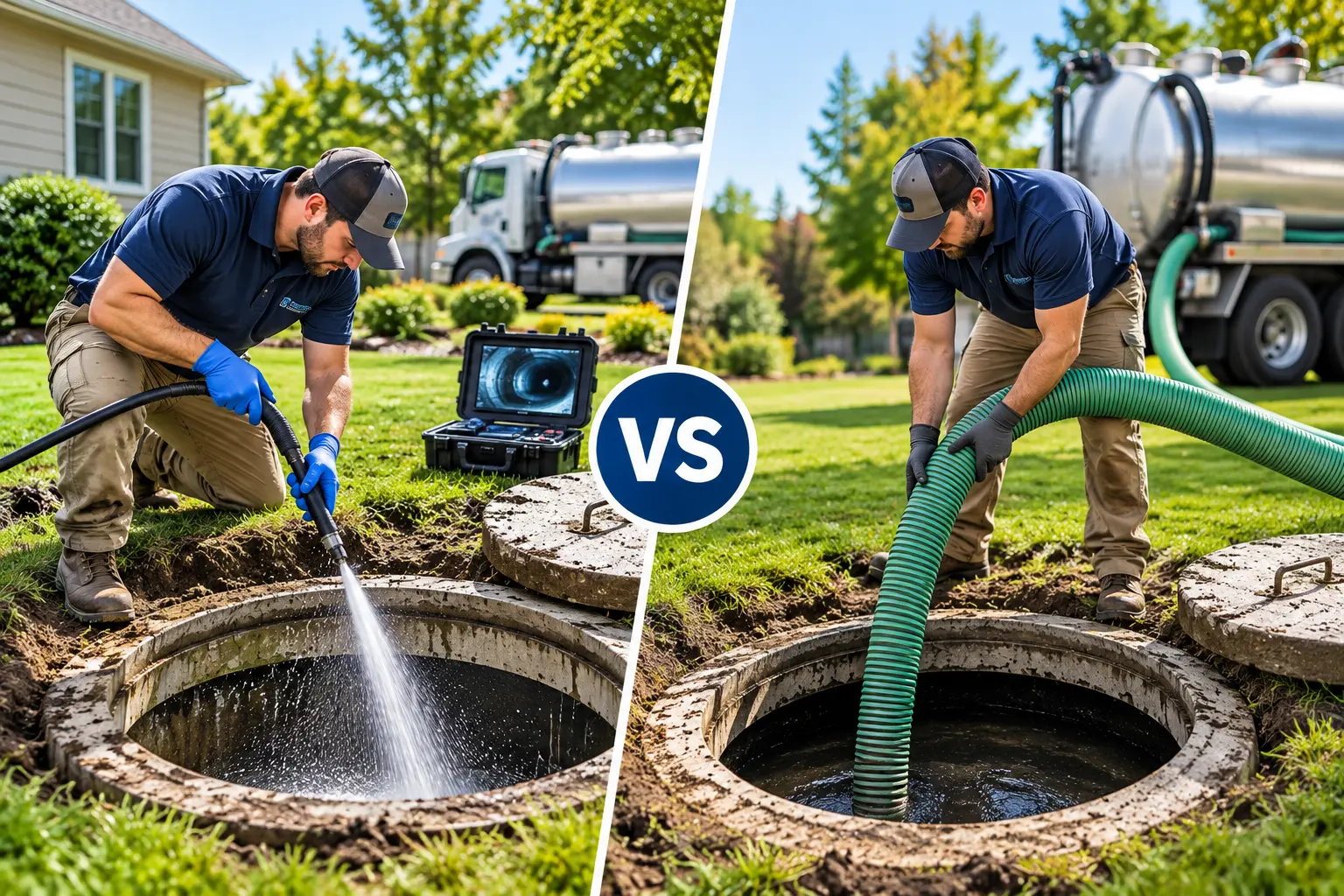

A septic tank leaking can cause property damage, unpleasant odors, and potential health risks if left unaddressed. Common warning signs include unusually wet grass, standing water, persistent sewage smells, and wastewater surfacing near your septic system.
Imagine noticing a wet patch in your backyard after several dry days. While it might look like a drainage issue, it could indicate a damaged septic tank, leaking pipe, or failing drainfield.
For homeowners in Pierce, Thurston, and King County, Washington, recognizing these warning signs early can help prevent more serious septic problems.
7 Warning Signs Your Septic Tank May Be Leaking
Not every septic problem starts with sewage appearing in your backyard. Some warning signs develop gradually, making them easy to overlook.
Here are seven symptoms homeowners should take seriously.
1. Persistent Sewage Smell Around Your Property
A persistent sewage odor around your septic tank or drainfield is one of the first things homeowners may notice.
You might smell something unpleasant while spending time in your backyard, near your septic tank, or around areas where wastewater is treated.
This can happen when wastewater escapes from damaged components or when the septic system is not functioning properly.
However, odors can also come from plumbing vent problems, blocked pipes, or other septic issues.
What should you do?
If the smell continues or becomes stronger, arrange a professional septic assessment. Avoid opening the tank or attempting to investigate underground components yourself.
2. Standing Water or Unusually Wet Soil
Have you noticed a wet patch in your backyard that never seems to dry?
Standing water near a septic tank or drainfield can indicate that wastewater is not moving or dispersing properly.
Possible causes include:
- Damaged septic tank connections.
- Leaking inlet or outlet pipes.
- A saturated drainfield.
- Groundwater intrusion.
- Poor surface drainage.
This is particularly important for homeowners in Washington, where prolonged rainfall can saturate the surrounding soil.
A wet yard does not automatically mean your septic tank is leaking. The source of the water needs to be identified before deciding on repairs.
3. Unusually Green Grass Above Your Septic System
One area of your lawn looks noticeably greener and grows faster than the rest.
Could your septic system be responsible?
When wastewater reaches the surrounding soil, nutrients can encourage unusually strong vegetation growth.
This may happen above a septic tank or drainfield experiencing problems.
Pay particular attention if the grass is also spongy, the soil remains wet during dry weather, or sewage odors are present.
These combined symptoms deserve professional attention.
4. Sewage or Wastewater Surfacing in Your Yard
This is one of the most serious warning signs.
If you notice sewage or wastewater appearing on the ground near your septic tank or drainfield, your system may be experiencing a failure.
Possible causes include:
- Structural tank damage.
- Blocked outlet pipes.
- Drainfield failure.
- Excessive wastewater entering the system.
- Damaged septic components.
Untreated wastewater can contain harmful microorganisms that pose risks to people, pets, and the surrounding environment.
Keep children and pets away from the affected area. Avoid direct contact with the water and contact a qualified septic professional promptly.
Do not attempt to clean up a significant sewage spill yourself.
5. Slow Draining Sinks, Showers, and Toilets
A slow-draining sink might seem like a simple plumbing problem.
But when several fixtures throughout your home begin draining slowly at the same time, it may indicate a larger issue.
For example, a blocked main wastewater line or a clogged septic tank outlet can prevent wastewater from flowing properly.
Look for additional warning signs, such as:
- Gurgling sounds in your plumbing.
- Multiple slow-draining fixtures.
- Unpleasant odors.
- Recurring drainage problems.
A single slow drain may be caused by an ordinary blockage. Multiple symptoms occurring together deserve further investigation.
6. Frequent Toilet and Plumbing Backups
Imagine flushing your toilet and noticing that wastewater starts rising instead of draining away.
A sewage backup can quickly turn into a stressful situation for any homeowner.
It may indicate:
- A blocked sewer line.
- A full septic tank.
- A clogged effluent filter.
- A damaged outlet pipe.
- A failing drainfield.
Importantly, a sewage backup does not necessarily mean the septic tank is leaking.
Stop unnecessary water use and arrange professional assistance rather than repeatedly flushing or attempting to force wastewater through the system.
7. Wet or Soggy Areas Around the Drainfield
Your drainfield is responsible for receiving and treating wastewater from the septic tank.
When it becomes saturated, blocked, or damaged, wastewater may not disperse properly.
Homeowners may notice:
- Persistent soggy ground.
- Standing water.
- Unusually green grass.
- Sewage odors.
- Wastewater surfacing.
Heavy rainfall can make existing drainfield problems more noticeable because saturated soil has less capacity to absorb additional wastewater.
If these symptoms appear after a period of heavy rain, do not assume the problem will disappear once the weather improves.
Have the system evaluated to determine whether the issue is temporary saturation or a more serious failure.
Is Your Septic Tank Leaking or Is It a Drainfield Problem?
This is one of the most important questions homeowners should understand.
A leaking septic tank and a failing drainfield are not the same problem.
Both can produce unpleasant odors, wet ground, and other warning signs, but they involve different components of your septic system.
Here is a simple comparison.
| Possible Problem | What You Might Notice |
|---|---|
| Cracked septic tank | Possible wastewater leakage near the tank |
| Damaged septic pipes | Wet areas along pipe routes or drainage problems |
| Blocked outlet pipe | Slow drains or sewage backups |
| Full septic tank | Backups and possible drainage problems |
| Failing drainfield | Soggy ground, standing water, and odors |
| Saturated soil | Temporary drainage problems after heavy rainfall |
The distinction matters because the repair solution depends on the actual cause.
For example, pumping a tank may help when excessive solids have accumulated, but it will not repair a structural crack or restore a failing drainfield.
A professional inspection helps identify the source of the problem before unnecessary work is performed.
Why Washington’s Heavy Rain Can Make Septic Problems Worse
Homeowners in Pierce, Thurston, and King County are familiar with extended periods of rainfall.
While rain itself does not necessarily cause a septic tank to leak, excessive groundwater and saturated soil can affect how a septic system operates.
When the ground becomes saturated, the drainfield may struggle to accept and disperse wastewater.
This can contribute to:
- Slow drainage.
- Wet areas around the drainfield.
- Sewage odors.
- Wastewater surfacing.
- Plumbing backups.
Sterling’s Google customer feedback includes an experience from a homeowner who described how an atmospheric river affected their septic system. The customer praised the team’s response, workmanship, and ability to handle a challenging situation.
It is a useful reminder that Washington weather can create difficult conditions for septic systems.
However, heavy rain-related septic problems should not automatically be diagnosed as tank leaks. The tank, pipes, drainfield, and surrounding soil may all need to be evaluated.
What Causes a Septic Tank to Leak?
Understanding the possible causes can help homeowners recognize why septic problems develop.
Cracks in the Tank
Aging, deterioration, ground movement, and external pressure can contribute to cracks in septic tanks.
Depending on the location and severity, wastewater may escape into the surrounding soil.
Damaged Inlet or Outlet Pipes
The pipes connecting your home to the septic tank and the tank to the drainfield can become damaged.
Tree roots, ground movement, and physical pressure may contribute to cracks, broken connections, or blockages.
Deteriorating Tank Materials
Older septic tanks may experience structural deterioration over time.
Concrete tanks can develop cracks or weakened joints, while other tank materials can also become damaged through age and physical stress.
Tree Root Intrusion
Tree roots naturally seek moisture.
If roots reach septic pipes or damaged connections, they may enter the system and contribute to blockages or further damage.
Excessive Groundwater Pressure
Prolonged rainfall and saturated soil can affect underground septic components.
Groundwater can also enter damaged or poorly sealed tanks.
A professional assessment is necessary to determine whether the problem involves a leak, groundwater intrusion, or another septic system failure.
What Should You Do If You Suspect a Septic Tank Leak?
Discovering a possible septic leak can be stressful, but taking the right steps can help protect your household and property.
1. Reduce Unnecessary Water Usage
Avoid excessive laundry, long showers, and other activities that send large amounts of wastewater into the system.
2. Keep Children and Pets Away
If wastewater is visible on the ground, prevent people and animals from entering the affected area.
3. Do Not Open or Enter the Tank
Septic tanks contain dangerous gases and present serious confined-space hazards. Never enter a septic tank or attempt to inspect its internal components yourself.
4. Avoid Driving Over the Septic System
Vehicles and heavy equipment can damage underground tanks, pipes, and drainfield components.
5. Contact a Septic Professional
A qualified professional can investigate the problem and determine whether the issue involves the tank, pipes, pump, or drainfield.
Getting the correct diagnosis is the first step toward finding the appropriate repair solution.
Can a Leaking Septic Tank Be Repaired?
In many situations, septic system problems can be repaired. However, the solution depends on the type and severity of the damage.
For example:
Damaged Pipes: A damaged section of septic piping may be repairable without replacing the entire system.
Tank Cracks: Some damage may be repairable depending on the tank material and structural condition. More extensive damage may require replacement.
Pump Problems: A malfunctioning pump may need servicing or replacement.
Drainfield Problems: Drainfield issues require a separate assessment. Depending on the cause, corrective work or replacement may be necessary.
Before recommending a repair, a professional should evaluate the condition of the system and explain the available options.
The goal should be to address the actual problem rather than spend money on temporary solutions that do not resolve the underlying issue.
How Much Does Septic Tank Repair Cost in Washington?
The cost of septic tank repair depends on the specific problem.
A minor pipe repair and a complete drainfield replacement involve very different amounts of work.
Some of the main cost factors include:
- Type and size of the septic tank.
- Location and accessibility.
- Extent of structural damage.
- Whether pipes or pumps need replacement.
- Drainfield condition.
- Labor, equipment, and applicable permits.
For homeowners in Pierce, Thurston, and King County, local site conditions and applicable health department requirements may also affect the work involved.
Rather than relying on generic online estimates, arrange an inspection and request a quote based on your system’s actual condition.
How to Prevent Future Septic System Problems
A little attention to maintenance can help prevent many common septic problems.
Here are some practical recommendations.
Schedule Regular Inspections
Do not wait until sewage backs up into your home. Routine inspections can identify developing problems before they become more serious.
Pump When Necessary
Pumping removes accumulated solids from the septic tank. The appropriate schedule depends on tank size, household usage, and inspection findings.
Protect Your Drainfield
Avoid driving vehicles or placing heavy structures over your drainfield.
Be Careful What You Flush
Only flush human waste and toilet paper. Avoid wipes, sanitary products, grease, and other materials that can contribute to blockages.
Manage Rainwater
Direct roof runoff and surface drainage away from your septic system.
Maintain Your Records
Keep copies of inspection reports, pumping records, and repair documentation. These records are especially useful when preparing to sell your home.
Frequently Asked Questions About Septic Tank Leaks
How do I know if my septic tank is leaking?
Common warning signs include persistent sewage odors, wet soil near the tank, standing water, and wastewater surfacing in your yard. These symptoms can also indicate other septic system problems, so a professional inspection is needed to confirm the cause.
Can heavy rain cause a septic tank to leak?
Heavy rain does not automatically cause a tank leak. However, saturated soil and elevated groundwater can affect septic system performance, particularly the drainfield. Existing damage may become more noticeable during extended rainfall.
Is a leaking septic tank dangerous?
It can be. Untreated wastewater may contain harmful bacteria, viruses, and other contaminants. Avoid contact with suspected sewage and keep children and pets away from affected areas.
Can a cracked septic tank be repaired?
Some cracks may be repairable, depending on the tank material, location, and extent of damage. More serious structural problems may require tank replacement.
Does pumping a septic tank fix a leak?
No. Pumping removes accumulated solids and wastewater but does not repair structural cracks, damaged pipes, or failing drainfields.
How quickly should I fix a leaking septic tank?
Visible sewage, wastewater surfacing, or sewage backups require prompt attention. Even less obvious warning signs should be investigated before the problem becomes more serious.
How often should a septic system be inspected in Washington?
Inspection requirements depend on the system type and local jurisdiction. For example, King County generally requires conventional gravity systems to be inspected every three years, while certain other systems require more frequent inspections. Always check the requirements for your property.
Need Professional Septic Service in Pierce, Thurston, or King County?
A septic problem does not always begin with a major backup. Sometimes, it starts with an unusual smell, a wet patch in your yard, or a change in how your plumbing drains.
Recognizing these warning signs early can help you avoid more disruptive problems and make informed decisions about your septic system.
Sterling Septic & Plumbing provides septic pumping, inspections, repairs, drainfield services, and septic maintenance for homeowners across Pierce, Thurston, and King County, Washington.
Whether you are dealing with a suspected septic leak, a drainage problem, or an unexpected septic emergency, having an experienced team assess the situation can make all the difference.
Need help with your septic system?
Call Sterling Septic & Plumbing at (253) 254-8630 to discuss your concerns and schedule service.