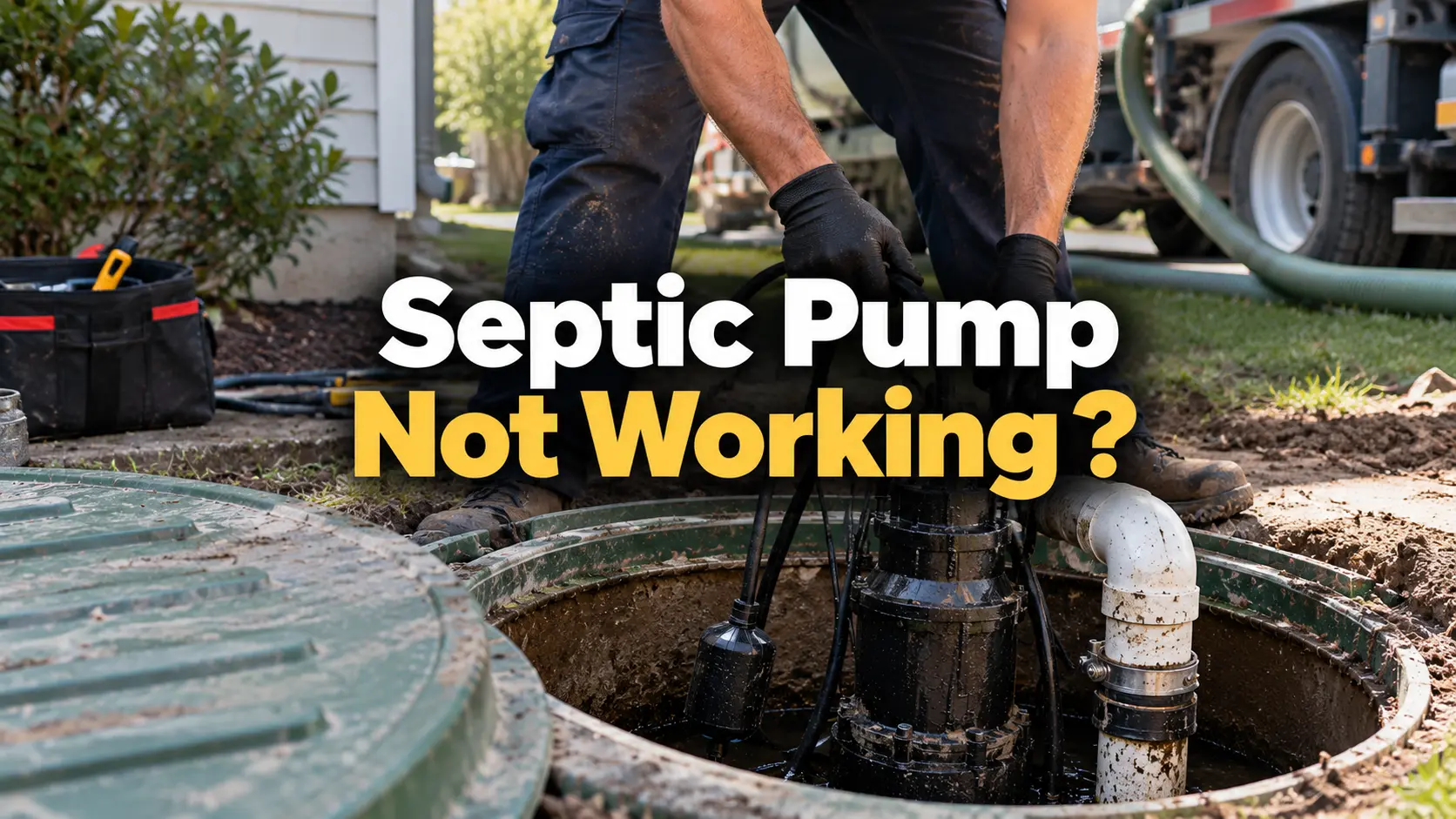
A septic pump that stops working can quickly become a problem for your household. You might notice a high water alarm, hear the pump running continuously, or find that wastewater is not moving through the system as it should.
However, a septic pump not working does not always mean the pump itself has failed. The problem could be a faulty float switch, an electrical issue, a blocked discharge line, or another component in the septic system.
Knowing the warning signs and understanding what to do next can help you respond before the situation gets worse.
In this guide, we explain the common causes of septic pump failure, the symptoms to watch for, what you can safely check, and when to call a professional. If you own a home in Pierce, King, or Thurston County, Washington, this information can help you understand your options when a septic pump problem occurs.
How Do You Know If Your Septic Pump Is Not Working?
A septic pump moves wastewater from a pump chamber to another part of the septic system when gravity alone cannot move it where it needs to go. If the pump stops working correctly, wastewater may begin accumulating in the chamber.
The symptoms depend on your system’s design and the cause of the problem.
1. Your Septic Pump Alarm Is Going Off
A high water alarm is one of the most noticeable signs of a possible septic pump problem.
Many pumped septic systems have an alarm that activates when wastewater rises above a designated level in the pump chamber. This can happen if the pump fails, the float switch malfunctions, or wastewater enters the chamber faster than the pump can remove it.
What should you do?
Reduce water use immediately and follow the manufacturer’s instructions for your alarm. If the alarm remains active, contact a septic professional.
An alarm does not automatically mean the pump has failed. A technician needs to identify the underlying cause.
If you want to understand the different reasons an alarm might activate, read our guide to what your septic tank alarm means.
2. Wastewater Is Backing Up Into Your Home
When a septic pump cannot move wastewater properly, water may accumulate in the system and eventually cause plumbing backups.
You might notice:
- Toilets that do not flush properly.
- Water backing up into showers or bathtubs.
- Wastewater coming up through floor drains.
- Multiple drains becoming slow at the same time.
These symptoms can also result from a blocked sewer line, a full septic tank, or another drainage problem.
If sewage is backing up into your home, stop unnecessary water use and arrange professional service promptly. Avoid contact with wastewater because it can contain harmful microorganisms.
3. Your Drains Are Slower Than Usual
A slow kitchen sink does not necessarily indicate a septic pump problem. However, when several fixtures throughout the house begin draining slowly, the issue may involve the main drainage line or septic system.
Pay attention to whether the problem affects one fixture or multiple fixtures.
If you also notice an active septic alarm, unusual odors, or wastewater backups, the system needs further investigation.
4. The Pump Runs Continuously
A septic pump should operate according to the system’s design and wastewater levels. If it runs continuously or much more frequently than usual, something may be wrong.
Possible causes include:
- A faulty float switch.
- Excessive wastewater entering the chamber.
- A damaged or leaking discharge line.
- A pump that cannot move wastewater efficiently.
- A problem with the pump controls.
Continuous operation can put additional strain on the equipment.
Do not assume the pump needs replacement without first identifying the cause. A professional can determine whether the problem involves the pump itself or another part of the system.
5. You Hear Humming or Unusual Noises
A pump that hums but does not move wastewater may have a motor problem, a blockage, or an electrical issue.
Other unusual sounds can also indicate that the equipment is struggling to operate.
However, sound alone cannot confirm the cause. Some pumps operate quietly, while others make normal operating noises.
If the pump sounds different from usual and the system is not functioning properly, arrange an inspection rather than attempting to open or dismantle the equipment yourself.
6. You Notice Wet Ground or Sewage Odors Outside
Wet patches, standing water, or sewage odors around your septic system may indicate a problem with wastewater distribution, the drain field, or another component.
A failed pump is one possible cause, but these symptoms can also occur when the soil is saturated, a pipe is damaged, or the septic system has another problem.
Avoid walking through suspected wastewater-contaminated areas. Keep children and pets away, reduce water use, and contact a septic professional.
What Causes a Septic Pump to Stop Working?
Several problems can prevent a septic pump from operating correctly. Identifying the cause is important because the appropriate repair depends on the specific fault.
1. Power Supply Problems
A septic pump needs a reliable electrical supply to operate.
A tripped circuit breaker, power outage, damaged wiring, or electrical fault can prevent the pump from starting.
If your pump suddenly stops working, consider whether there has been a recent power interruption.
You can check your household electrical panel for an obvious tripped breaker if it is safe to access. However, do not repeatedly reset a breaker that trips again. This may indicate an electrical or equipment fault that needs professional attention.
Never handle electrical equipment in wet conditions or open electrical components in a septic chamber.
2. A Faulty or Stuck Float Switch
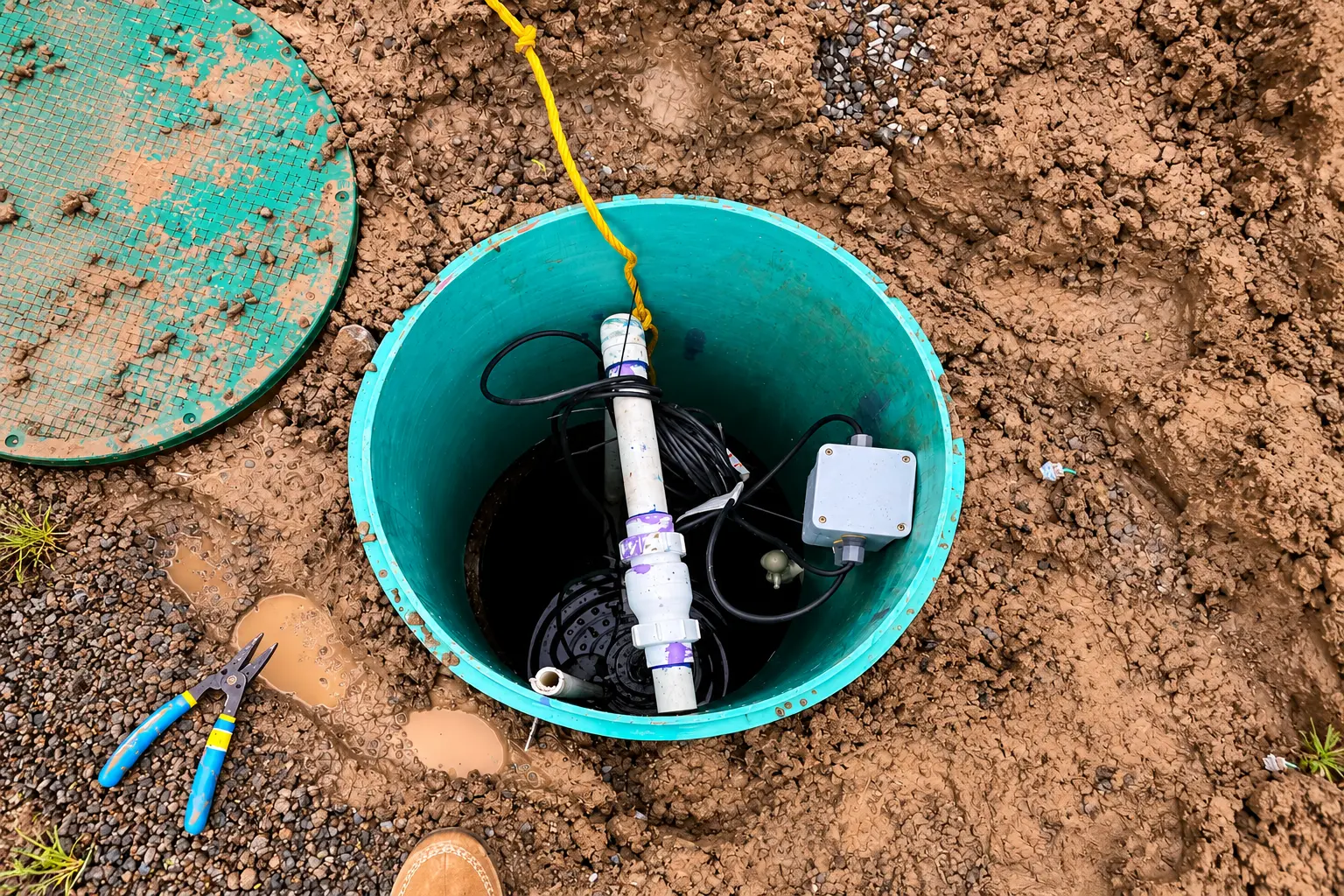
The float switch monitors the wastewater level in the pump chamber and helps control when the pump starts and stops.
When the water rises, the float switch signals the pump to activate. When the water level drops, it signals the pump to stop.
If the float becomes stuck, damaged, or fails electrically, the pump may not start when needed. In other cases, the pump may continue running longer than it should.
A faulty float switch can therefore cause high-water alarms and continuous pump operation.
A professional can inspect the switch and determine whether it needs adjustment or replacement.
3. A Failed Pump Motor
Like other mechanical equipment, septic pumps can wear out over time.
A damaged motor may prevent the pump from starting or moving wastewater. Depending on the type of failure, the pump might make unusual noises, trip a breaker, or stop operating completely.
The pump’s age, operating conditions, maintenance history, and the nature of the damage can all affect its condition.
A technician can assess whether the pump is repairable or whether replacement is the more practical option.
4. A Blocked Pump or Impeller
The pump’s impeller helps move wastewater through the system. Certain materials entering the pump chamber can interfere with its operation or damage internal components.
Items such as wipes, sanitary products, and other unsuitable materials should never be flushed into a septic system.
Even products labeled flushable may cause problems in plumbing or septic equipment.
If a blockage is suspected, do not reach into the pump chamber or attempt to remove the obstruction yourself. Septic chambers can contain dangerous gases and electrical hazards.
5. A Blocked or Damaged Discharge Line
The discharge line carries wastewater away from the pump.
If the line becomes blocked, damaged, or frozen in locations where freezing occurs, wastewater may not move through the system as intended.
A restriction can also cause the pump to work harder than normal or contribute to a high-water alarm.
A professional can inspect the line and determine whether cleaning, repair, or replacement is necessary.
6. Too Much Wastewater Entering the System
Sometimes the pump is functioning, but wastewater is entering the chamber faster than the pump can move it.
This may happen during unusually heavy household water use or when another part of the septic system is not functioning correctly.
For example, a problem with wastewater distribution or a saturated drain field may contribute to rising water levels.
The solution is not necessarily a new pump. The entire system may need to be evaluated to determine why wastewater is accumulating.
Septic Pump Troubleshooting: Symptoms and Possible Causes
If you are trying to understand what might be wrong with your system, the following table can help you identify possible explanations.
| Symptom | Possible Cause | Recommended Action |
|---|---|---|
| Septic pump alarm is on | High water level, pump failure, or float switch problem | Reduce water use and arrange an inspection |
| Pump does not start | Power supply issue, faulty float switch, or failed motor | Check the alarm and have the equipment diagnosed |
| Pump runs continuously | Float switch problem, excessive inflow, or discharge issue | Arrange a professional evaluation |
| Wastewater backs up into the home | Pump failure, blockage, or another drainage problem | Stop unnecessary water use and seek prompt service |
| Wet ground near the system | Possible discharge problem, drain field issue, or system failure | Avoid the area and contact a septic professional |
| Pump makes unusual noises | Possible motor damage, blockage, or mechanical problem | Avoid dismantling the equipment and arrange an inspection |
These symptoms can have multiple causes, so this table should not be used as a definitive diagnosis. A professional inspection is the best way to determine what is actually wrong.
What to Do If Your Septic Pump Stops Working
If you suspect a pump failure, taking the right steps can help reduce the risk of wastewater backups and further damage.
Step 1: Reduce Water Use Immediately
Stop unnecessary water use throughout your home.
Avoid running the washing machine, dishwasher, and other water-consuming appliances. Keep showers short or postpone them, and avoid unnecessary toilet flushing.
Every gallon of wastewater entering the system adds to the volume the pump may need to move.
Reducing water use will not fix the underlying problem, but it can help limit additional wastewater accumulation while you arrange service.
Step 2: Check the Alarm
If your septic system has an alarm, note whether it is sounding and whether it has a visual indicator.
Consult the manufacturer’s instructions to understand what the alarm indicates.
Do not assume that silencing an alarm resolves the problem. The high-water condition may still exist.
If the alarm remains active, contact a septic professional.
Step 3: Check the Breaker Only If It Is Safe
If you suspect a power issue, you can check your household electrical panel for an obvious tripped breaker, provided the panel and surrounding area are dry and safe.
Do not open the pump chamber, handle wet electrical equipment, or repeatedly reset a breaker that trips again.
If the breaker appears normal but the pump is not operating, leave further electrical troubleshooting to a qualified professional.
Step 4: Look for Visible Warning Signs
Without opening the tank or pump chamber, check for visible signs of trouble around your property.
These may include:
- Wastewater backing up into plumbing fixtures.
- Unusual sewage odors.
- Wet or unusually soft ground around the system.
- Standing water in the yard.
- A persistent septic alarm.
Share these observations with the technician. They can help narrow down the possible causes.
Step 5: Contact a Septic Professional
If the pump is not working, the alarm remains active, or wastewater is backing up, arrange professional service promptly.
A technician can evaluate the pump, float switch, electrical supply, discharge line, and other relevant components to determine what is causing the problem.
Never enter a septic tank or pump chamber. These confined spaces can contain toxic gases and dangerously low oxygen levels. Pump chambers also present electrical and mechanical hazards.
Can You Fix a Septic Pump Yourself?
Some initial checks are reasonable for homeowners, but most septic pump repairs require professional diagnosis.
You can generally:
- Reduce household water use.
- Check the alarm indicator and consult the manufacturer’s instructions.
- Look for visible signs of wastewater backups or pooling.
- Check an accessible household breaker if it is safe to do so.
You should leave the following tasks to qualified professionals:
- Opening or working inside a pump chamber.
- Testing or repairing electrical components.
- Removing or dismantling the pump.
- Repairing the float switch or pump controls.
- Clearing internal pump blockages.
- Repairing underground discharge lines.
Attempting these repairs without the appropriate training and equipment can cause injury, electrical shock, or further damage to the system.
Septic Pump Repair vs. Replacement: Which Do You Need?
A septic pump that stops working does not automatically need to be replaced. The right solution depends on what has failed and the condition of the equipment.
| Problem | Possible Solution |
|---|---|
| Tripped breaker or power supply fault | Diagnose and correct the electrical issue |
| Faulty float switch | Repair or replace the switch, depending on the fault |
| Blocked pump | Professional assessment and appropriate cleaning or repair |
| Damaged discharge line | Repair or replace the affected section |
| Failed pump motor | Evaluate whether repair or pump replacement is appropriate |
| Repeated high-water alarms | Inspect the pump and other system components to identify the underlying cause |
These are general examples, not a diagnosis. Similar symptoms can have different causes, so testing and inspection are important.
When Is Pump Replacement Necessary?
Replacement may be appropriate when the pump has suffered significant internal damage, cannot be repaired reliably, or has reached the end of its useful service life.
However, a technician should also investigate why the pump failed.
For example, replacing a pump without addressing a blocked discharge line or faulty control system may allow the same problem to happen again.
A proper diagnosis helps ensure that the recommended work addresses the underlying issue rather than just the symptoms.
If the problem involves other parts of your septic system, professional septic tank repair services may also be relevant.
What Happens During a Professional Septic Pump Repair?
If you call a septic professional because your pump is not working, the service process generally begins with identifying the symptoms and evaluating the system.
Depending on the situation, the technician may:
1. Assess the problem: Review the alarm status, operating symptoms, and any wastewater backups.
2. Inspect relevant components: Evaluate the pump, float switch, controls, and accessible sections of the system as appropriate.
3. Identify the cause: Determine whether the issue involves the pump itself, its power supply, a blockage, the discharge line, or another component.
4. Recommend the appropriate repair: Explain whether a repair, component replacement, pump replacement, or further system evaluation is needed.
5. Test the system: Where appropriate, confirm that the repaired equipment operates correctly and that the underlying issue has been addressed.
The exact process depends on the system design and the problem found during the inspection.
If the pump is working but wastewater continues to accumulate, additional investigation may be necessary to identify problems elsewhere in the septic system.
When Should You Call for Emergency Septic Service?
Some septic pump problems require prompt attention because continued wastewater use can make the situation worse.
Contact a septic professional promptly if:
- Sewage is backing up into your home.
- Your high-water alarm remains active.
- Wastewater is surfacing in the yard.
- The pump repeatedly trips the circuit breaker.
- The pump runs continuously without lowering the water level.
- You notice strong sewage odors along with signs of a system malfunction.
While waiting for help, minimize water use and keep people and pets away from areas where wastewater may be present.
If sewage has entered your home, avoid direct contact and arrange appropriate cleanup after the underlying problem has been addressed.
Septic Pump Repair in Pierce, King, and Thurston Counties
When a septic pump stops working, identifying the actual cause is the first step toward restoring proper operation.
Homeowners in Pierce, King, and Thurston Counties, Washington, may experience pump-related problems involving electrical components, float switches, discharge lines, or other parts of their septic systems.
Sterling Septic & Plumbing provides septic services, including septic pumping, inspections, and septic tank repairs. The appropriate service depends on the problem identified and the type of system installed.
If your pump is not working, your alarm keeps sounding, or wastewater is backing up, a professional evaluation can help determine the next steps.
Need Help With a Septic Pump Problem?
Contact Sterling Septic & Plumbing LLC to discuss the symptoms and determine what service may be appropriate.
Frequently Asked Questions
1. Why Is My Septic Pump Not Turning On?
A septic pump may fail to start because of a power supply problem, a tripped breaker, a faulty float switch, damaged wiring, or a failed motor. A blockage or another system issue may also interfere with operation. The pump and its controls should be evaluated to identify the actual cause.
2. Can a Septic Pump Stop Working Without Setting Off the Alarm?
Yes. An alarm may not activate immediately, depending on the system design, alarm settings, and nature of the failure. Some problems may develop before wastewater reaches the alarm’s activation level. If the pump appears to be malfunctioning, do not rely on the alarm alone to determine whether the system is operating correctly.
3. What Does a Septic Pump Alarm Mean?
A septic pump alarm often indicates that the wastewater level in the pump chamber has risen above a designated level. Possible causes include pump failure, a faulty float switch, a power issue, or excessive wastewater entering the chamber. Follow the manufacturer’s instructions, reduce water use, and seek professional assistance if the alarm remains active.
4. Can I Still Use Water If My Septic Pump Stops Working?
It is best to minimize water use until the problem has been assessed. Additional wastewater can raise the level in the pump chamber and increase the risk of backups. Avoid unnecessary flushing, laundry, dishwashing, and showers while arranging professional service.
5. Should a Failed Septic Pump Be Repaired or Replaced?
The answer depends on the pump’s condition and the cause of the failure. Some problems involve repairable components, such as a float switch, while significant motor damage may make replacement more practical. A professional diagnosis can help determine the appropriate option.
6. How Long Does Septic Pump Replacement Take?
The time required varies according to the pump’s location, the system design, accessibility, and whether additional repairs are needed. A straightforward replacement may take less time than a job involving damaged wiring, a blocked discharge line, or other system problems. Ask the service provider for an estimate after the system has been assessed.