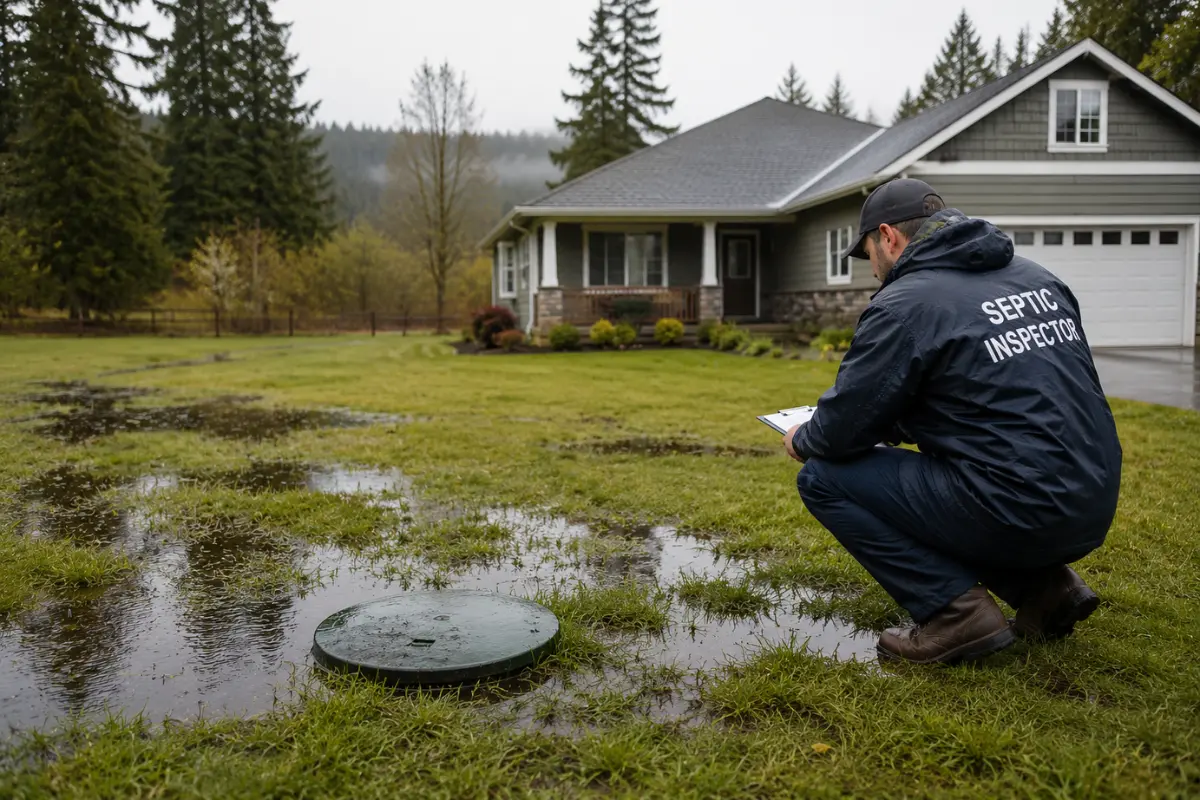
Washington’s rainy season brings lush landscapes and cooler temperatures, but it can also put extra stress on your septic system. Prolonged rainfall saturates the soil, making it harder for your drain field to absorb wastewater. This can lead to common septic problems during Washington’s rainy season, including slow drains, standing water, sewage odors, and even backups. Knowing what to look for can help you protect your home and avoid costly repairs.
Why Does Rain Affect Septic Systems?
A properly functioning septic system relies on the drain field to filter and disperse treated wastewater into the surrounding soil. During periods of heavy or prolonged rainfall, the ground becomes saturated, leaving less room for wastewater to drain.
When this happens, wastewater may move more slowly through the system, causing backups, standing water, unpleasant odors, or even system failure if the problem is ignored.
1. Waterlogged Drain Field
A waterlogged drain field is one of the most common septic issues during Washington’s rainy season.
When the soil becomes saturated with rainwater, it cannot absorb wastewater efficiently. Instead, wastewater backs up inside the drain field, reducing your system’s ability to function.
Signs of a Waterlogged Drain Field
- Wet or soggy areas above the drain field
- Standing water that remains after rain
- Grass growing unusually fast over the drain field
- Slow plumbing fixtures throughout the home
- Sewage odors outdoors
How to Help Prevent It
- Keep roof gutters and downspouts directed away from the drain field.
- Avoid driving or parking on the drain field.
- Reduce household water use during extended periods of heavy rain.
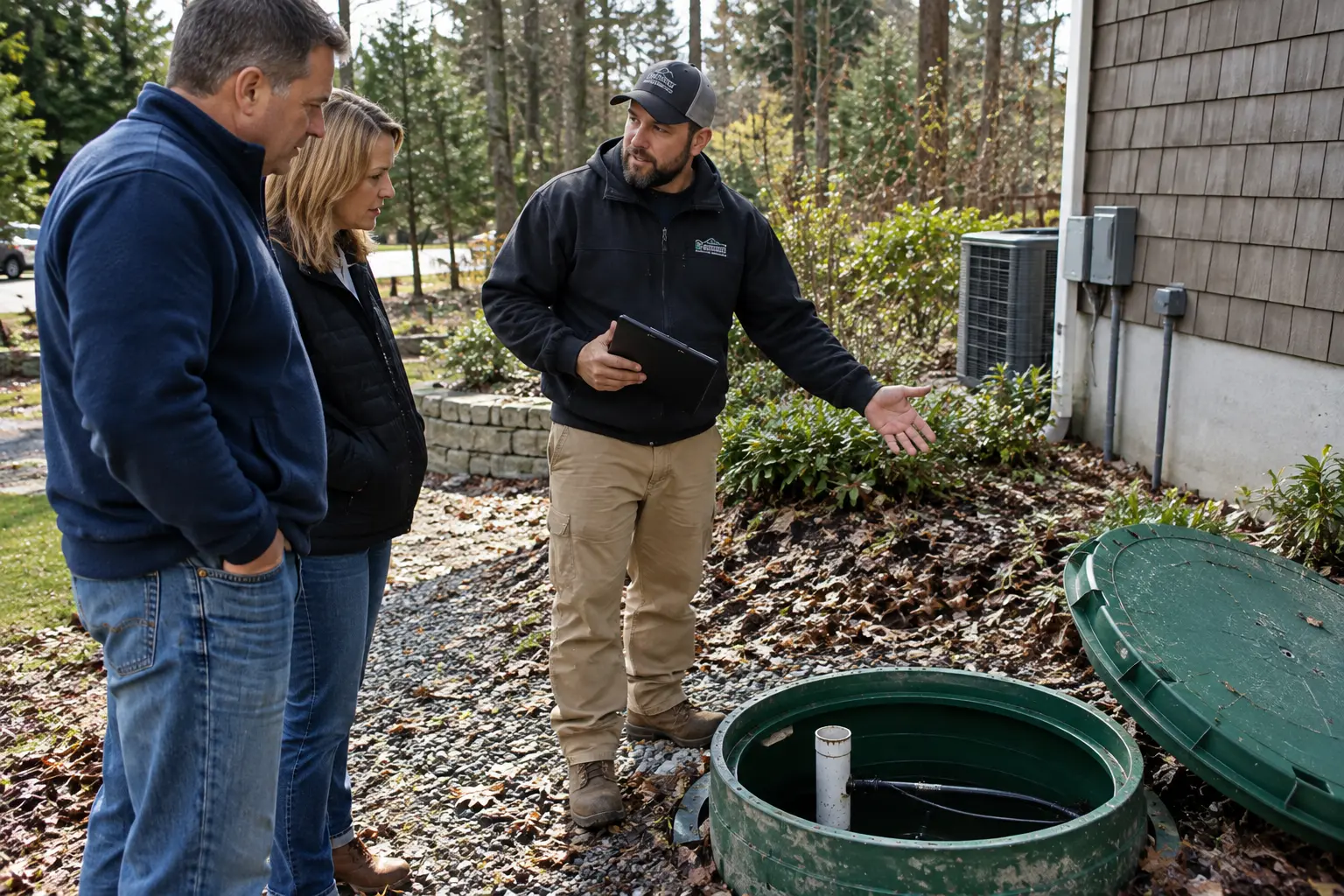
- Schedule routine septic inspections to identify drainage problems early.
2. Slow Drains Throughout Your Home
If multiple sinks, showers, or toilets begin draining slowly after several days of rain, your septic system may be struggling to move wastewater through a saturated drain field.
Unlike a simple clogged drain, slow drainage affecting multiple fixtures often indicates the septic system is under stress.
What You Can Do
- Limit laundry loads until the ground dries.
- Fix leaking faucets or running toilets.
- Spread water use throughout the day.
- Watch for worsening symptoms that may require professional service.
If slow drains continue after the weather improves, your septic system should be inspected.
3. Sewage Backups Inside the House
Few plumbing problems are more unpleasant than sewage backing up into sinks, tubs, or toilets.
Heavy rainfall can contribute to backups when wastewater has nowhere to go because the drain field is saturated.
Warning Signs
- Toilets gurgling
- Water backing up into showers
- Multiple plumbing fixtures clogging at once
- Sewage odors inside the home
What Should You Do?
If sewage enters your home:
- Stop using water immediately.
- Keep family members and pets away from contaminated areas.
- Do not attempt to force wastewater through the system by using more water.
- Contact a septic professional as soon as possible.
4. Standing Water Around the Septic System
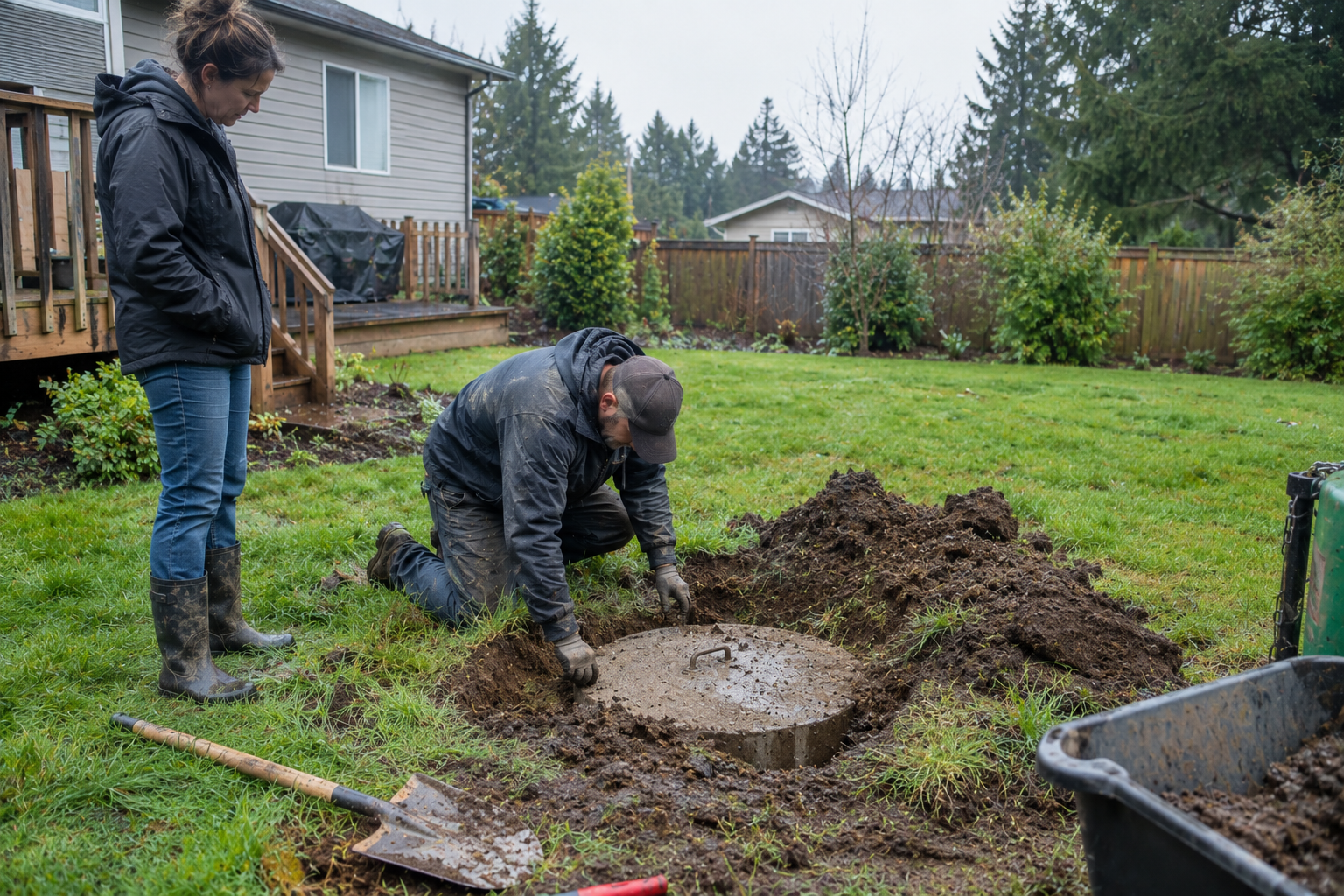
Puddles or consistently wet ground around your septic tank or drain field should never be ignored.
Although rain naturally creates puddles, standing water that remains long after the storm has passed may indicate your septic system is not dispersing wastewater properly.
Possible causes include:
- Saturated drain field soil
- Damaged drain lines
- Poor yard drainage
- Failing septic components
An inspection can determine whether the problem is weather-related or a sign of a larger system issue.
5. Septic System Failure
Repeated exposure to saturated conditions can place ongoing stress on older septic systems.
If maintenance has been neglected or the drain field is already nearing the end of its lifespan, heavy rains may expose existing problems that eventually lead to system failure.
Signs of possible failure include:
- Frequent sewage backups
- Persistent foul odors
- Standing wastewater
- Slow drains that never improve
- Unusually lush grass over the drain field
Early repairs are almost always less expensive than replacing an entire septic system.
How to Protect Your Septic System During Washington’s Rainy Season
Although you cannot control the weather, you can reduce the risk of septic problems by following a few simple maintenance practices.
Schedule Regular Septic Pumping
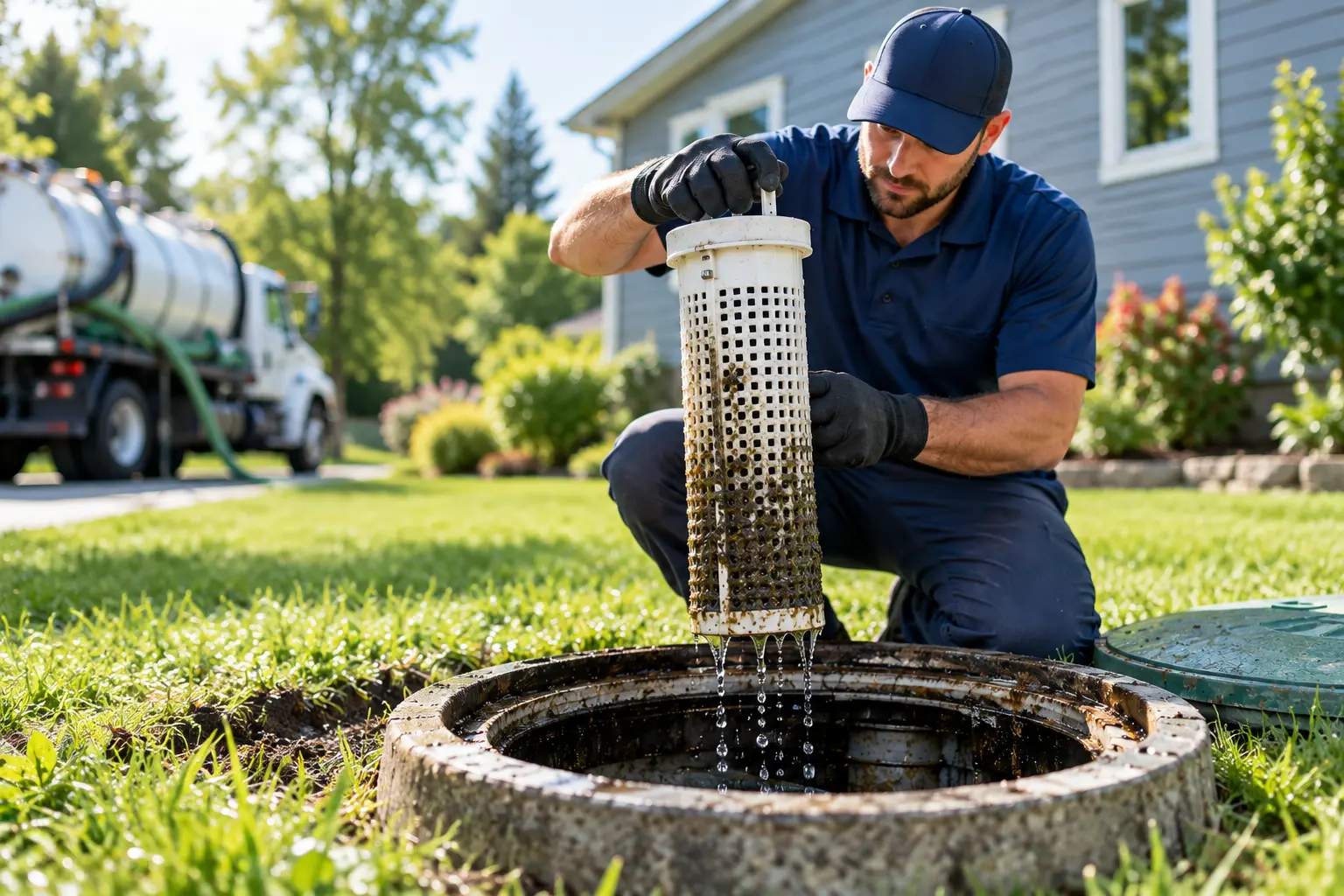
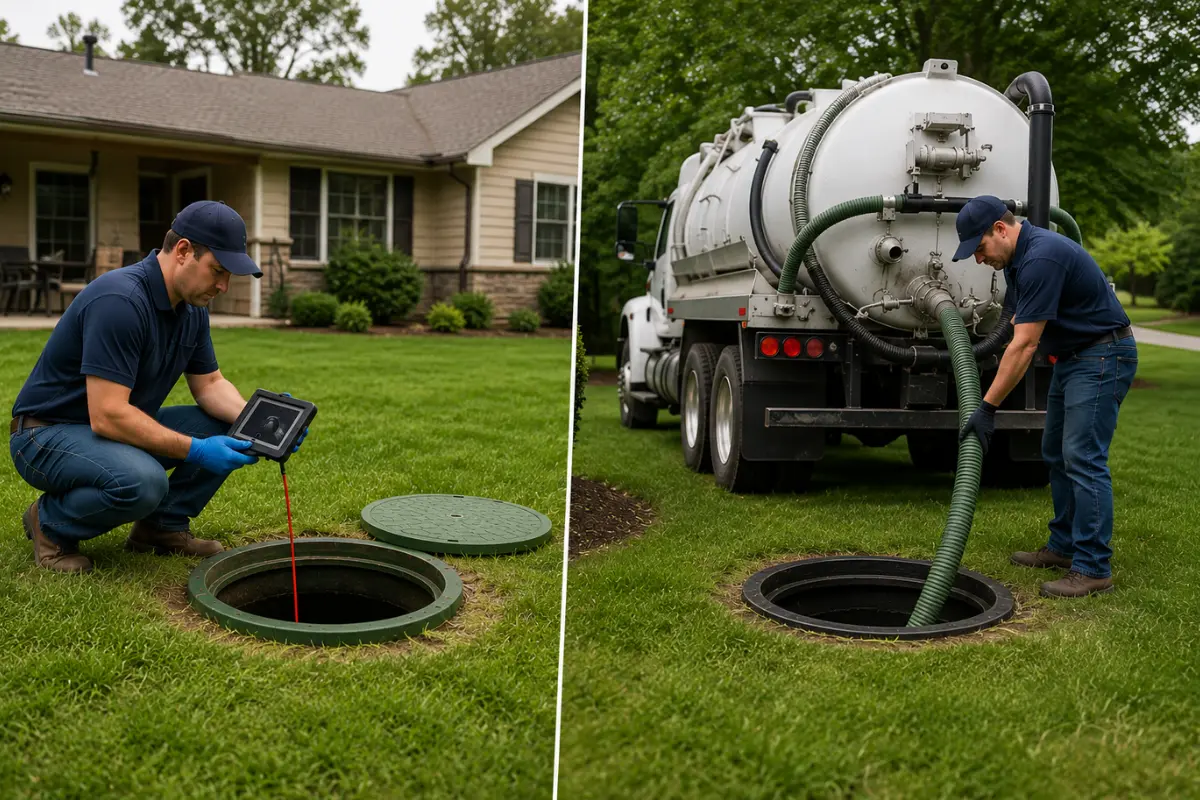
Routine pumping prevents solids from building up inside the tank and reduces stress on the drain field.
Conserve Water During Heavy Rain
Spacing out laundry, showers, and dishwasher use gives your system more time to process wastewater.
Keep Rainwater Away From the Drain Field
Make sure gutters, downspouts, and landscape drainage direct water away from your septic components whenever possible.
Avoid Compacting the Soil
Never drive, park, or build structures over your drain field. Compacted soil reduces its ability to absorb wastewater.
Schedule Routine Inspections
Professional inspections help identify developing problems before they become costly emergencies.
Frequently Asked Questions
Can heavy rain fill my septic tank?
Not usually. Septic tanks are designed to be watertight. However, heavy rain can saturate the drain field, preventing wastewater from draining properly and causing backups.
Is standing water over my drain field normal?
Temporary puddles after a storm may be normal, but standing water that remains for several days can indicate a septic problem that should be inspected.
Should I use less water during heavy rain?
Yes. Conserving water during periods of prolonged rainfall reduces stress on your septic system and allows it to process wastewater more effectively.
How often should a septic tank be pumped?
Most residential septic tanks should be pumped every three to five years, although the exact schedule depends on household size, tank capacity, and water usage.
Can rainy weather damage my drain field permanently?
Occasional heavy rain usually does not cause permanent damage. However, repeated saturation combined with poor maintenance can shorten the life of a drain field.
When to Call a Professional
Contact a septic professional if you notice:
- Sewage backing up into your home
- Multiple slow drains at the same time
- Standing water over the drain field
- Persistent sewage odors
- Toilets that frequently gurgle
- Wet spots that remain days after rainfall
Addressing these warning signs early can help prevent larger repairs and protect your property.
Schedule Septic Service in Pierce, Thurston, and King County
If your septic system is showing signs of trouble during Washington’s rainy season, do not wait for a complete backup. The experienced team at Sterling Septic & Plumbing provides septic pumping, inspections, repairs, and system troubleshooting for homeowners throughout Pierce County, Thurston County, and King County.
Whether you are dealing with slow drains, standing water, or sewage odors, our technicians can identify the cause and recommend the right solution to keep your septic system operating safely year-round.
Contact Sterling Septic & Plumbing today to schedule professional septic service and keep your system ready for Washington’s wettest months.