If you own a home with a septic system, there are probably a few things you know you are supposed to do: pump the tank, watch what you flush, and keep an eye out for signs of trouble.
Effluent filter cleaning is one of those septic maintenance tasks that many homeowners don’t think about until something goes wrong.
It sits inside the septic tank near the outlet, quietly doing its job every day. You may never see it, and when everything is working properly, you probably don’t need to think about it very often.
But when that filter becomes clogged, you may suddenly notice slow drains, wastewater backing up, or unpleasant odors.
So, what exactly does an effluent filter do, and how often should you clean it?
Let’s take a closer look.
What Is an Effluent Filter?
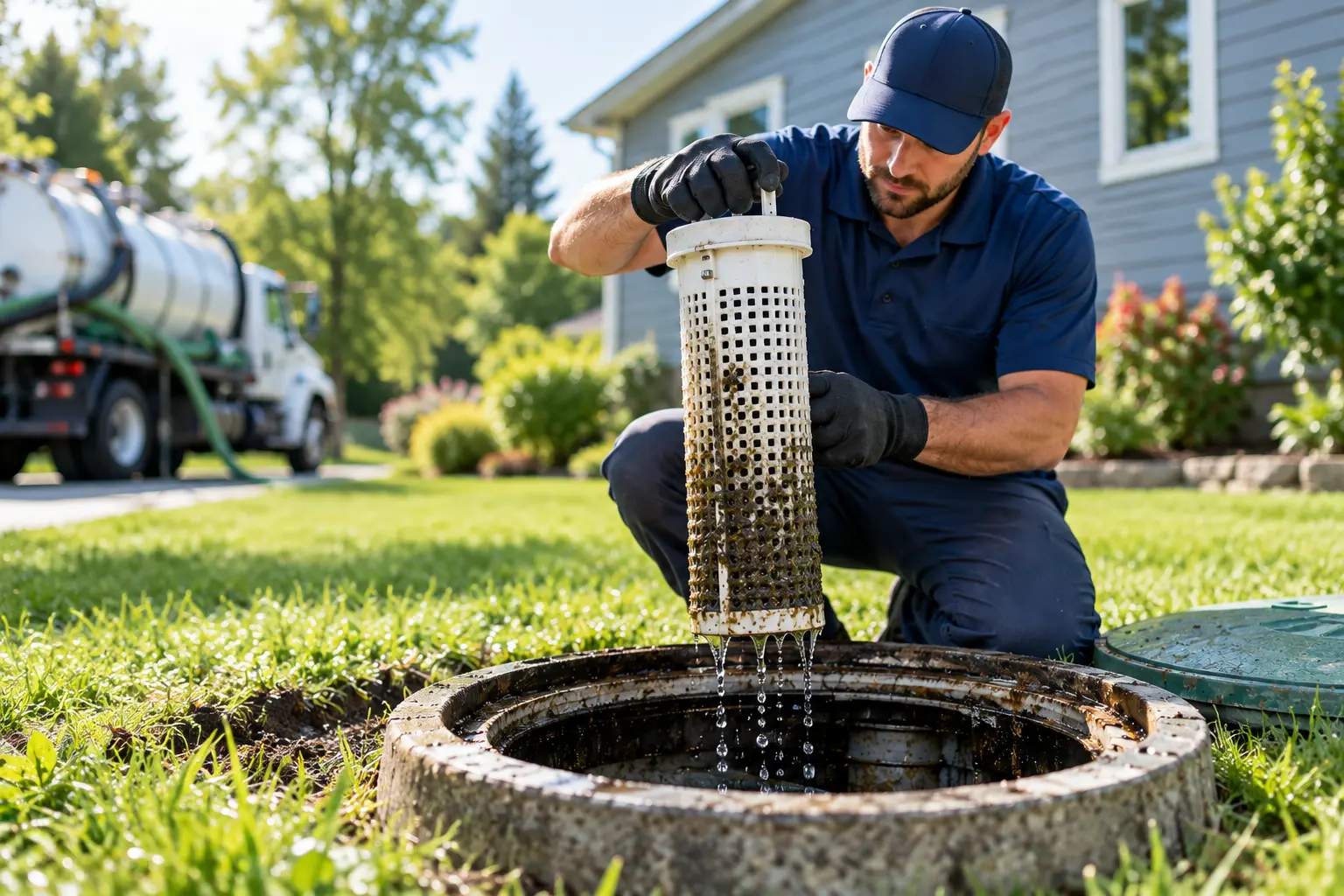
An effluent filter is a screened device installed near the outlet of a septic tank.
Its job is simple but important: it helps keep larger suspended solids inside the septic tank instead of allowing them to travel toward the drainfield.
Think of it as one last line of defense before wastewater leaves the tank.
Inside your septic tank, wastewater naturally separates. Heavier solids settle to the bottom, lighter materials rise to the top, and the liquid wastewater remains between them.
That liquid, called effluent, eventually leaves the tank and moves toward the drainfield.
The effluent filter helps prevent remaining solids from going along with it.
That matters because your drainfield is not designed to handle a large amount of solid material. Keeping those solids in the tank helps protect the rest of the septic system.
Why Is an Effluent Filter Important?
A septic tank can hold a lot of wastewater and solids, but that doesn’t mean everything inside should be allowed to leave the tank.
If too many solids make their way into the outlet line and drainfield, they can contribute to clogs and other problems.
An effluent filter provides an additional barrier.
Washington State Department of Health identifies a clogged outlet baffle or effluent filter as a potential cause of sewage backing up into the home or surfacing near the septic tank. The agency also recommends cleaning an effluent filter when the system has one.
That small filter can therefore play a surprisingly important role in protecting one of the most expensive parts of your septic system.
How Often Should an Effluent Filter Be Cleaned?
This is probably the question you’re really here for.
As a general Washington guideline, an effluent filter should be checked and cleaned about every 6 to 12 months.
Washington State Department of Health recommends cleaning outlet baffle filters every 6 to 12 months.
However, that doesn’t mean every homeowner has exactly the same schedule.
How quickly a filter collects solids can depend on:
- The number of people living in the home
- Household water usage
- Septic tank size
- How the septic system is used
- Whether a garbage disposal is used
- The type of septic system
- Previous maintenance history
If your filter becomes heavily loaded with solids between cleanings, it may need attention more frequently.
And if you’re not sure what type of septic system you have, it’s worth finding out. Washington DOH notes that different septic systems require different maintenance, and homeowners in Pierce, King, and Thurston Counties can use the state’s online septic records resources to find system information.
What Happens If an Effluent Filter Gets Clogged?
Imagine taking a shower one morning and noticing that the water isn’t draining quite as quickly as it normally does.
You don’t think much of it.
A few days later, the bathroom sink seems slow too.
Then you flush the toilet and hear the plumbing make a strange gurgling sound.
At this point, many homeowners assume they have a plumbing clog.
Sometimes that’s exactly what it is.
But if you have a septic system, a clogged effluent filter is another possibility.
When the filter becomes restricted, wastewater may have difficulty leaving the septic tank at the normal rate. Depending on the system and severity of the blockage, this can contribute to backups or wastewater surfacing near the tank.
That’s why a small maintenance task can be much easier—and less expensive—to deal with than waiting until the system stops working properly.
What Are the Signs Your Effluent Filter Needs Cleaning?
A clogged filter doesn’t always announce itself immediately.
Some warning signs to watch for include:
- Slow drains throughout the house
- Toilets that drain slowly or gurgle
- Sewage backing up into the home
- Unpleasant septic odors
- Wet areas around the septic tank
- Wastewater surfacing near the tank
- A filter that repeatedly becomes clogged
It’s important to remember that these symptoms don’t automatically mean the effluent filter is the problem.
A septic backup can have several causes, including problems with the tank, plumbing, pump, drainfield, or other system components.
That’s where a proper inspection can help.
How Does Effluent Filter Cleaning Work?
Cleaning an effluent filter usually involves accessing the septic tank, removing the filter from its housing, and rinsing accumulated material from the screen.
It sounds simple.
But there’s an important part that shouldn’t be overlooked.
A septic tank is not something you should enter yourself.
Septic tanks can contain dangerous gases and wastewater. Even when the filter itself is accessible, homeowners should take appropriate precautions around an open tank.
If you know where your filter is and your system is designed for homeowner maintenance, follow the manufacturer’s and local health authority’s instructions.
If you’re unsure, having a qualified septic professional inspect and clean it is the safer option.
Does Cleaning the Effluent Filter Mean You Don’t Need Septic Pumping?
No.
This is an easy point to confuse.
Cleaning the filter and pumping the septic tank are two different maintenance tasks.
Professional septic pumping removes accumulated sludge and solids from inside the septic tank.
Pumping removes accumulated sludge and solids from inside the septic tank.
Think about it like a sink.
The filter is helping stop material from moving farther down the system, while pumping removes the material that has already accumulated inside the tank.
Cleaning one does not replace the other.
How often your tank needs pumping depends on factors such as household size, tank size, water use, and the amount of solids accumulating in the tank. Your septic professional can determine the appropriate schedule based on the condition of your system.
Do All Septic Systems Have an Effluent Filter?
No.
Not every septic system is identical, and not every system uses the same components.
Washington has several types of septic systems, including conventional gravity systems, pressure distribution systems, mound systems, sand filter systems, and other treatment systems.
That’s why it’s better to understand your specific system rather than assume that a maintenance tip applies exactly the same way to every septic tank.
If you’re buying a home with a septic system or you’ve never had the system professionally evaluated, finding out what type of system you have can be a good place to start.
What Should Pierce, Thurston, and King County Homeowners Know?
If you live in Pierce, Thurston, or King County, septic maintenance isn’t just about keeping your drains flowing.
Local requirements can vary depending on the type of system and property.
For example, King County requires conventional gravity systems to be inspected every three years, while many other system types require inspections every six months unless the manufacturer requires a more frequent schedule.
Thurston County also has specific operational and maintenance requirements, including updated requirements for certain systems that began January 1, 2026.
In other words, there isn’t one septic maintenance calendar that applies to every homeowner.
Knowing your system type and following the requirements for your property can help you avoid missed maintenance and unnecessary problems.
A Simple Example
Let’s say you live in Puyallup and have been in your home for several years.
Your septic system seems fine.
No backups.
No strange smells.
The toilets flush normally.
So you haven’t really thought about the effluent filter.
Then you schedule routine septic maintenance and the technician checks the tank.
The filter is packed with accumulated material.
Nothing has failed yet, but the filter is restricting the flow more than it should.
That’s a much better situation than discovering the problem after wastewater backs up into your home.
The point of routine septic maintenance isn’t to wait until something breaks.
It’s to find small problems while they’re still small.
How Can You Help Keep Your Effluent Filter Cleaner?
Your septic habits can affect how quickly solids accumulate in the system.
A few simple habits can make a difference:
- Flush only human waste and toilet paper.
- Keep wipes and paper towels out of the toilet.
- Avoid putting grease and cooking fats down the drain.
- Be careful about excessive garbage disposal use.
- Fix leaking toilets and faucets.
- Avoid sending excessive amounts of water into the septic system at once.
- Keep up with recommended septic inspections and pumping.
- Have the effluent filter checked and cleaned according to the appropriate schedule.
Your septic system is designed to handle normal household wastewater—not everything that happens to go down a drain.
When Should You Call a Septic Professional?
If you can’t remember the last time your effluent filter was checked, a septic inspection can help identify filter buildup, solids accumulation, damaged components, or other issues before they become bigger problems.
You should also consider professional septic service if you’re experiencing:
- Repeated slow drains
- Sewage backups
- Septic odors
- Wet or soggy areas around the septic system
- Unusually green grass over the drainfield
- A filter that repeatedly clogs
- An overdue septic inspection
- An overdue tank pumping
Washington State Department of Health identifies backups, surfacing wastewater, wet areas, and odors as potential warning signs of septic system problems.
The sooner you find the cause, the more options you may have.
Don’t Wait for a Clogged Filter to Become a Septic Problem
An effluent filter isn’t the biggest component of your septic system.
But it has an important job.
By keeping suspended solids from moving out of the septic tank, it helps protect the drainfield and the rest of the system.
For many Washington homeowners, checking and cleaning the filter every 6 to 12 months is a good general guideline. Your specific system, maintenance history, and local requirements may call for a different schedule.
If you’re in Puyallup, Pierce County, Thurston County, or King County and aren’t sure when your effluent filter was last cleaned, don’t wait for a backup to find out.
Sterling Septic & Plumbing can help you determine what your septic system needs and address problems before they become bigger headaches.
Not sure whether you need an effluent filter cleaning, septic pumping, an inspection, or something else?
Call Sterling Septic & Plumbing LLC at 253-676-9246. Our local septic professionals can help identify what your system needs and address problems before they become bigger headaches.
Frequently Asked Questions
How often should an effluent filter be cleaned?
Washington State Department of Health recommends cleaning outlet baffle filters every 6 to 12 months. Your actual maintenance schedule may vary depending on your septic system and property.
What happens if an effluent filter is not cleaned?
A clogged filter can restrict wastewater leaving the septic tank and may contribute to backups or wastewater surfacing near the tank.
Can I clean my septic effluent filter myself?
Some septic systems are designed to allow homeowner maintenance, but septic tanks can contain dangerous gases and wastewater. If you’re unsure about accessing or cleaning the filter, contact a qualified septic professional.
Does cleaning an effluent filter replace septic pumping?
No. Cleaning the filter and pumping the tank are separate maintenance tasks. Filter cleaning removes material from the filter, while pumping removes accumulated sludge and solids from the tank.
Do all septic tanks have an effluent filter?
No. Septic systems vary in design and components. The best way to know whether your system has one is to check your system records or have a septic professional inspect it.
What are the signs of a clogged effluent filter?
Slow drains, gurgling toilets, sewage backups, odors, and wastewater surfacing near the septic tank can all be warning signs. However, these symptoms can have other causes, so professional evaluation may be necessary.
How often should a septic tank be inspected?
The required inspection schedule depends on the type of septic system and local requirements. For example, King County requires conventional gravity systems to be inspected every three years, while many other system types require inspections every six months.
Can a clogged effluent filter damage the drainfield?
A clogged filter can restrict wastewater flow and contribute to septic problems. The filter’s purpose is also to help keep solids from reaching the drainfield, so regular maintenance is an important part of protecting the system.