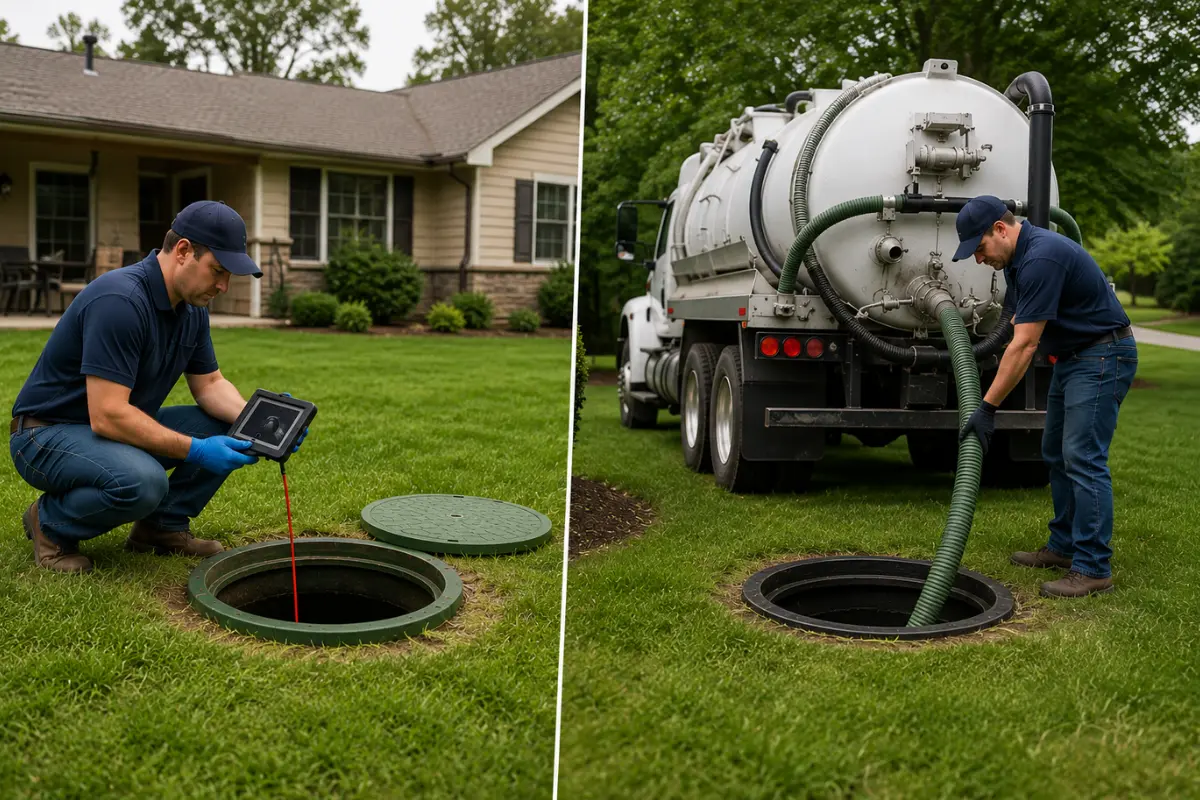
If you own a home with a septic system, there is a good chance you have heard two terms more than once: septic inspection vs septic pumping.
They are often mentioned together, especially when it is time to maintain a septic system or prepare a home for sale. That can make it easy to assume they are basically the same service.
They are not.
A septic tank can be pumped and still have a problem somewhere else in the system. On the other hand, an inspection can tell you that the tank needs pumping, but an inspection by itself does not remove the solids that have built up inside the tank.
So, what is the difference between septic inspection and septic pumping, and when do you need each one?
Let us take a closer look.
What Is Septic Tank Pumping?
Septic pumping is the process of removing the accumulated sludge and solids from your septic tank.
Over time, wastewater enters the tank and separates into different layers. Heavy solids settle at the bottom, while lighter materials float near the top. The tank continues working, but those solids do not simply disappear.
Eventually, they need to be removed.
During a pumping service, the technician locates and accesses the septic tank, connects the pumping equipment, and removes the contents of the tank.
At Sterling Septic & Plumbing, a standard pumping service involves locating and exposing the tank before pumping it out. A typical pumping service for a standard septic system takes around 45 minutes, although the actual time can vary depending on the system and site conditions.
What Pumping Does
Septic pumping helps:
- Remove accumulated sludge and solids
- Reduce the risk of solids entering the drain field
- Maintain proper tank capacity
- Reduce the chance of backups caused by an overloaded tank
- Keep the system maintained
But there is an important point homeowners sometimes miss:
Pumping the tank does not mean the entire septic system has been inspected.
That is where an inspection comes in.
What Is a Septic Inspection?
A septic inspection looks at the condition and operation of the septic system.
Instead of simply removing the contents of the tank, a professional inspection examines the system for problems that could affect how it works.
Depending on the type and age of the system, an inspection may include checking:
- The septic tank
- Tank lids and access points
- Baffles
- Filters
- Solids and liquid levels
- Cracks or structural concerns
- Distribution components
- Drain field
- Other accessible septic components
Sterling’s inspection service explains that a professional inspection is much more than opening the tank lid and looking inside. Technicians assess the system for deficiencies and check components such as filters, solids accumulation, liquid levels, lids, cracks, and improper encroachments.
A standard septic inspection at Sterling usually takes about one to two hours, depending on the system and its condition.
So, What Is the Difference?
The easiest way to remember it is this:
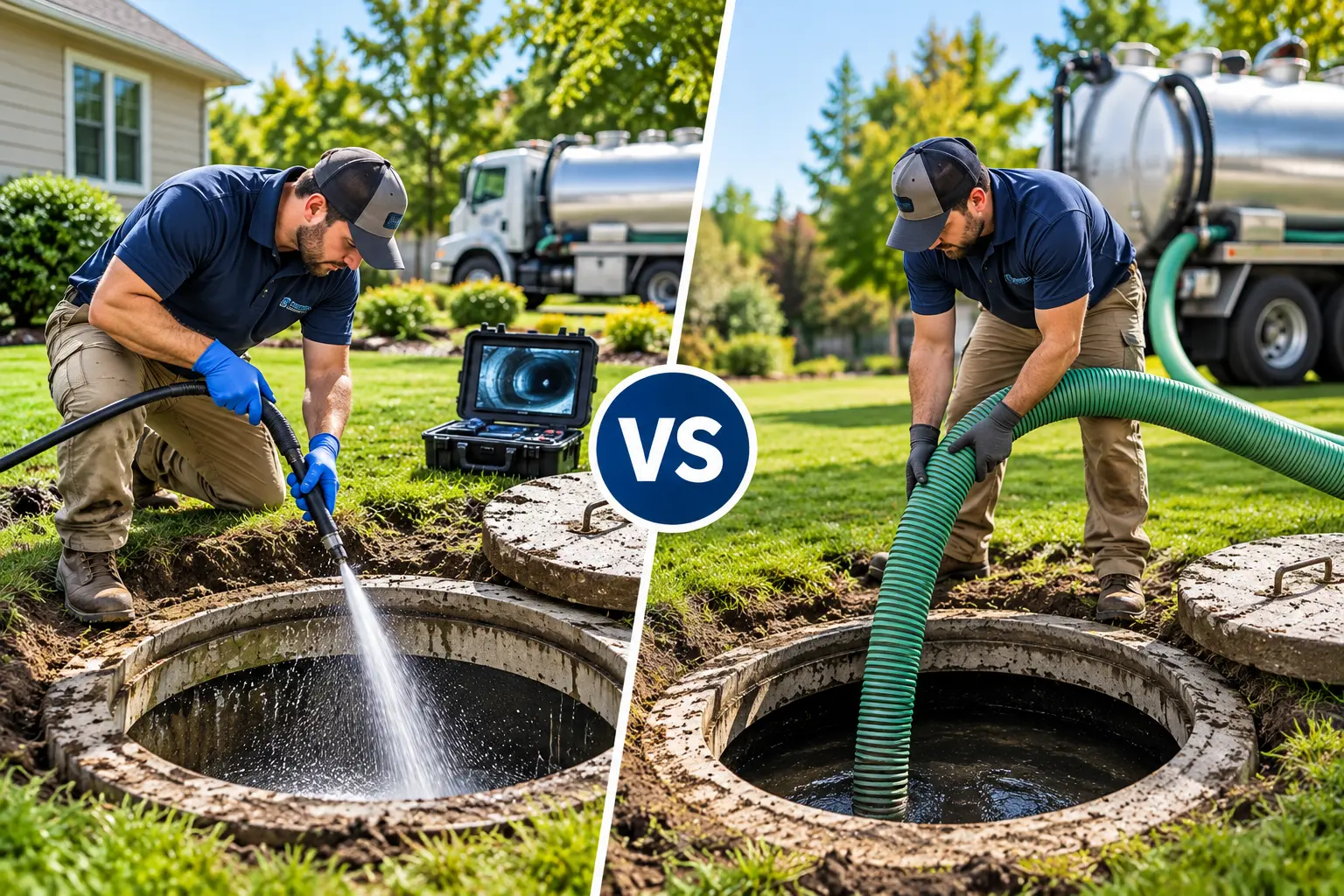
Pumping removes what has accumulated inside the tank.
Inspection checks how the septic system is doing.
Think of it like taking care of your car.
An oil change removes old oil and replaces it with new oil. A vehicle inspection looks for problems with the car’s other components.
You would not assume that changing the oil means the brakes, tires, battery, and suspension are automatically in good condition.
The same idea applies to your septic system.
Pumping is maintenance.
Inspection is evaluation.
Both can be important, but they serve different purposes.
Does a Septic Inspection Include Pumping?
Not automatically.
This is one of the most common questions homeowners ask, and Sterling specifically notes that a standard annual septic inspection does not include septic pumping unless pumping is requested separately.
That distinction matters.
For example, imagine you schedule an inspection because you have not checked your septic system in several years. During the inspection, the technician finds that the tank has a significant amount of accumulated solids.
The inspection has identified the problem.
The pumping service is what removes those solids.
Sometimes both services are scheduled together, but they are still two different jobs.
When Should You Pump Your Septic Tank?
There is no single pumping schedule that works for every home.
Household size, tank size, water usage, and how the system is used all affect how quickly solids accumulate.
A common general guideline is to pump a septic tank every three to five years, but some systems may need service more or less often. Sterling’s service information also notes that pumping frequency can vary based on household size and usage.
If you have a larger household or use significantly more water, your tank may need attention sooner.
The best approach is not to wait until wastewater starts backing up into the house.
Keeping records of previous pumping services can help you and your septic professional determine when the next service may be appropriate.
When Should You Get a Septic Inspection?
An inspection can make sense for several different reasons.
You may want an inspection if:
- You recently purchased a home with a septic system
- You are preparing to sell your home
- You have not had the system checked in several years
- You notice slow drains or unusual odors
- There is standing water near the drain field
- You suspect a septic problem
- You want to understand the condition of an older system
- You need documentation for a property transaction
Regular inspections can help identify problems before they become much more expensive.
For a homeowner in Puyallup, for example, a small septic issue discovered during a routine inspection can be much easier to deal with than a major failure discovered after sewage has backed up into the house.
What If You Are Selling Your Home?
This is where septic inspection and pumping often come together.
If you are selling a home with a septic system, you may need both services depending on the property and local requirements.
For example, Sterling’s home sale service includes septic pumping, O&M/OSM inspections, Report of System Status services, Time of Sale Reports, report filing, and site sketches for applicable properties.
In Pierce County, the Report of System Status process is part of the home-sale process. In King County, a Time of Sale Report and site sketch may be required depending on the property and applicable requirements.
This is one reason it is better to start the process early.
You do not want to discover a septic problem a few days before closing and then find yourself trying to coordinate pumping, repairs, inspections, and paperwork all at once.
Can Pumping Fix a Septic Problem?
Sometimes pumping is exactly what the system needs.
But pumping is not a cure for every septic problem.
Suppose the tank has been properly maintained but you are still experiencing backups. The problem could be somewhere else, such as a blocked line, damaged component, failing pump, or drain field issue.
Pumping the tank may temporarily change the situation, but it will not repair a damaged component or failing drain field.
That is why an inspection can be valuable when you are experiencing a problem.
Instead of guessing, you can find out what is actually happening.
What Happens If an Inspection Finds Something Wrong?
Finding a problem does not always mean you need a new septic system.
Sometimes the issue is relatively simple.
A filter may need cleaning. A component may need repair. The tank may need pumping. Another part of the system may need further evaluation.
Sterling notes that when an inspection identifies an issue requiring attention, photos or videos can be provided and a repair estimate can be prepared.
The important thing is to find the problem early.
A small repair is generally a much easier conversation than dealing with a failed septic system after wastewater has already reached your yard or home.
Do You Need Both Septic Pumping and Inspection?
Sometimes yes.
But they should not be treated as interchangeable services.
If your tank is due for pumping, pumping removes the accumulated solids.
If you want to know whether your septic system is functioning properly, an inspection evaluates the system.
And if you are selling a home, you may need both as part of the local home-sale process.
The right combination depends on your septic system, its maintenance history, the reason for the service, and the requirements that apply to your property.
A Simple Example
Imagine you have lived in your Puyallup home for five years.
The septic system seems to be working normally. No backups. No strange smells. Nothing obviously wrong.
You call a septic company because you think it is time for pumping.
The tank is pumped, and the job is finished.
But what do you actually know about the rest of the system?
Not much.
You know that the accumulated material was removed from the tank. You do not necessarily know whether the drain field is showing signs of stress, whether a component is damaged, or whether another issue needs attention.
That is the difference between removing the waste and checking the system.
Sometimes you need one.
Sometimes you need both.
Knowing which service you are actually scheduling can save confusion and help you take better care of your septic system.
Septic Inspection and Pumping in Puyallup and Beyond
For homeowners in Puyallup, Pierce County, King County, and Thurston County, Sterling Septic & Plumbing provides both septic inspections and septic pumping, along with repairs and home-sale septic services.
If you are unsure whether your septic tank needs pumping, an inspection can help determine its current condition. If you are preparing to sell your home, starting the inspection and pumping process early can also give you more time to handle any issues and required documentation.
The important thing is not to guess.
Not sure whether you need septic pumping, an inspection, or both? Contact Sterling Septic & Plumbing and let a local septic professional help you determine the right next step.
Frequently Asked Questions
Is septic pumping the same as a septic inspection?
No. Pumping removes accumulated solids from the septic tank, while an inspection evaluates the condition and operation of the septic system.
Does a septic inspection include pumping?
Not necessarily. Sterling states that a standard inspection does not include pumping unless it is specifically requested.
How often should a septic tank be pumped?
A common guideline is every three to five years, but the right schedule depends on factors such as tank size, household size, and water usage.
How long does a septic inspection take?
A standard inspection typically takes around one to two hours, although the time can vary depending on the system and its condition.
Do I need a septic inspection when selling my home?
Home-sale septic requirements vary by location and property. In Pierce and King Counties, specific inspection and documentation requirements can apply to septic properties.
Can pumping fix a septic backup?
Pumping may help if the tank is overloaded with accumulated solids, but a backup can have other causes. If the problem continues after pumping, the septic system should be evaluated by a professional.