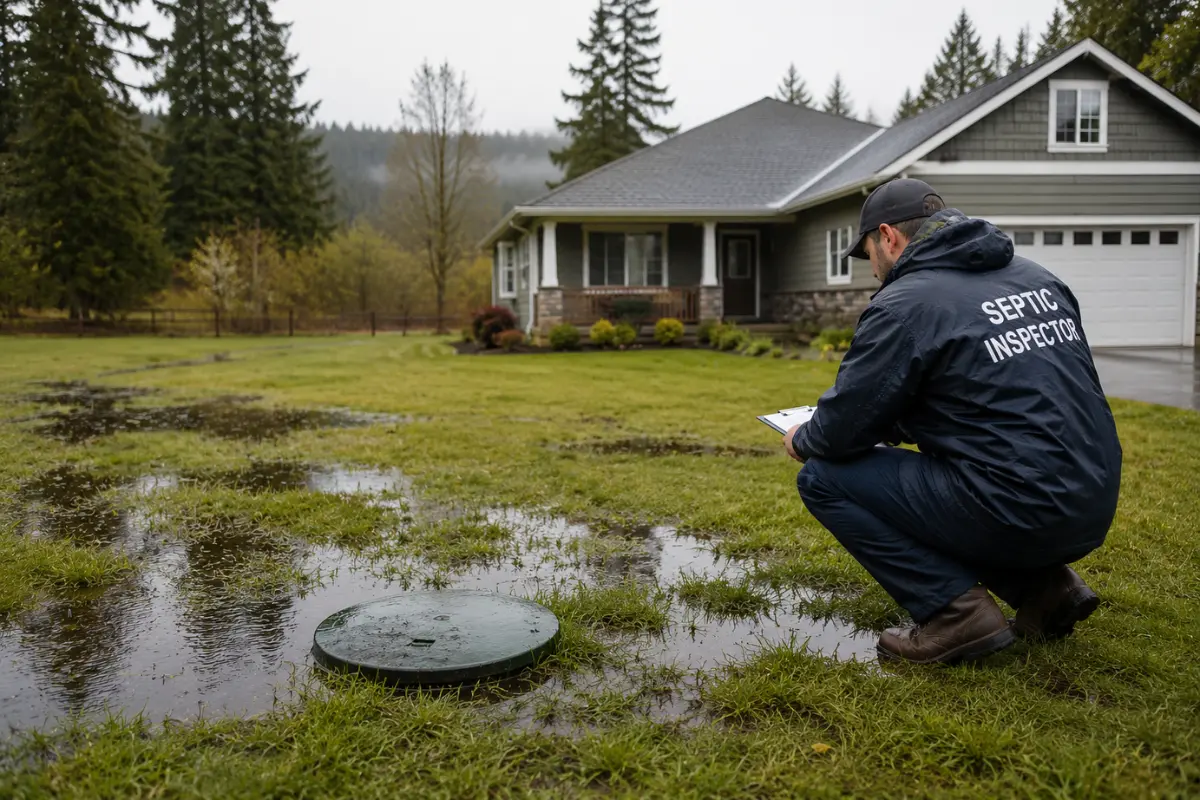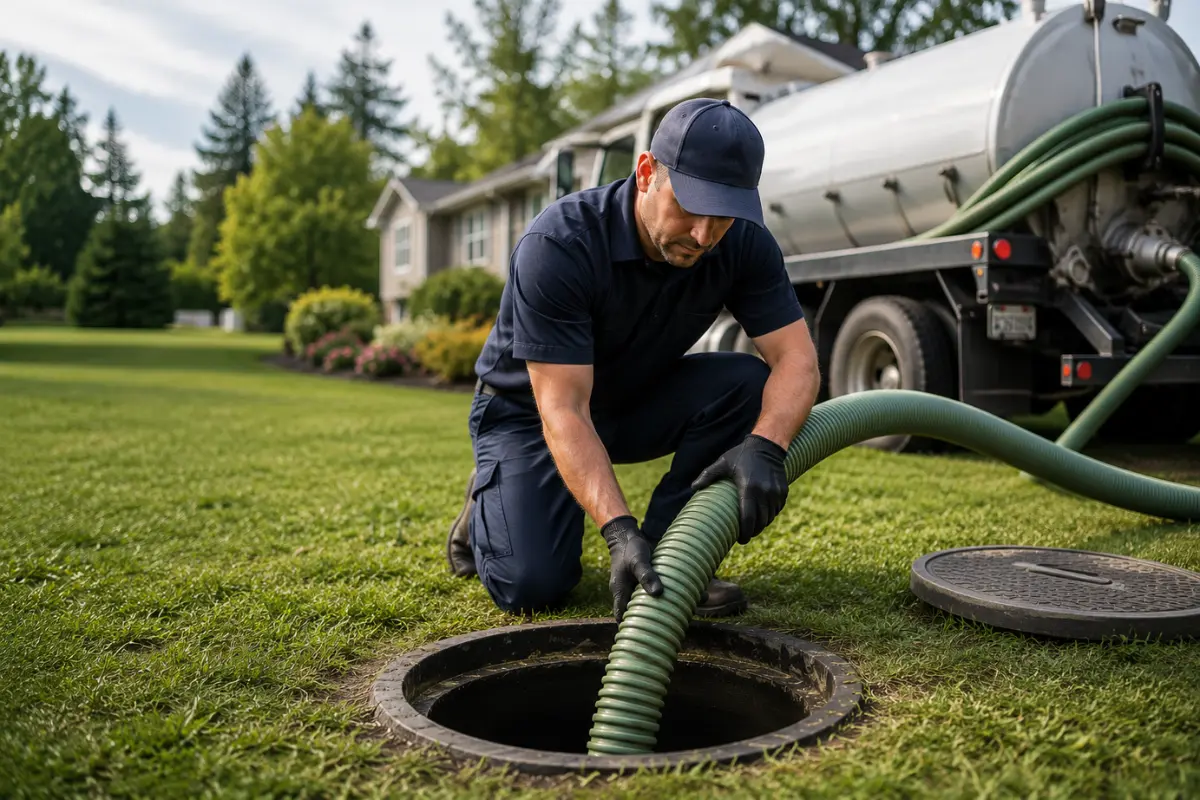

You walk outside after a heavy rain and immediately notice something is not right. There is a strong sewage smell in the yard, near the septic tank, or around the drain field. Maybe the smell disappears after a day or two. Maybe it comes back every time it rains.
If this sounds familiar, you are not alone.
The good news is that a septic smell after rain does not always mean your system has failed. However, it is usually a sign that something needs attention.
Let us look at the most common reasons this happens and what you can do about it.
Heavy Rain Can Saturate the Soil Around Your Drain Field
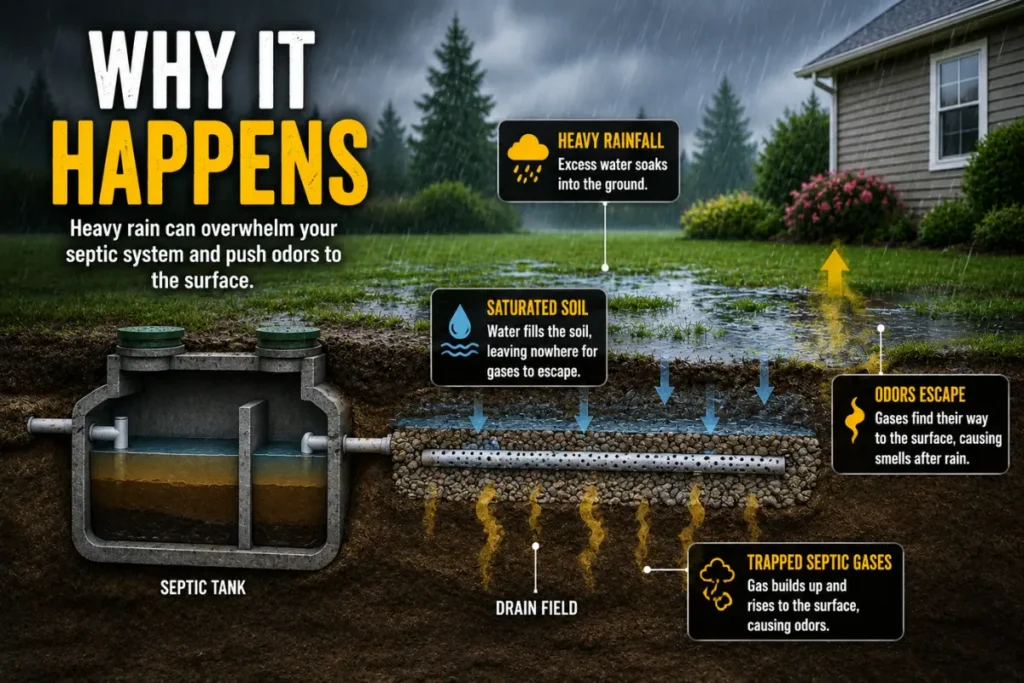
Western Washington gets plenty of rain throughout the year. When the ground becomes saturated, your drain field has a harder time doing its job.
Think of your drain field like a sponge. When the sponge is already full of water, it cannot absorb much more. The same thing happens when heavy rain saturates the soil around your septic system.
As wastewater struggles to move through the soil, odors that normally stay underground can become noticeable in your yard. In some cases, homeowners may even see wet spots or standing water near the drain field.
If these issues continue long after the rain stops, it may indicate underlying drain field problems that should be evaluated by a professional.
Your Septic Tank May Be Due for Pumping
One of the most common reasons septic odors become more noticeable after rain is a septic tank that is already nearing capacity.
Rain does not fill the septic tank directly, but it can put additional stress on a system that is overdue for maintenance. A tank with excessive sludge buildup may struggle to handle normal household wastewater, especially during periods of wet weather.
If it has been several years since your last service, scheduling septic tank pumping may help prevent bigger problems down the road.
You may also notice:
- Slow drains
- Gurgling sounds in pipes
- Sewage odors near the tank
- Occasional backups
Rain Can Reveal Existing Drain Field Problems
Sometimes the rain is not the problem at all.
Instead, the rain simply exposes a drain field issue that has been developing for months or even years.
A drain field that is becoming clogged or failing may continue functioning during dry weather. Once the soil becomes saturated, however, the warning signs become much harder to ignore.
Watch for:
- Standing water in the yard
- Strong sewage odors
- Extra-green patches of grass
- Slow drains throughout the home
- Frequent septic backups
If you are seeing more than one of these symptoms, it is a good idea to schedule a professional inspection before the problem gets worse.
Blocked or Damaged Vent Pipes
Many homeowners are surprised to learn that the smell may not be coming from the septic tank or drain field at all.
Your plumbing system uses vent pipes to safely release sewer gases above the roofline. If those vents become blocked by debris, leaves, bird nests, or other obstructions, sewer gases may be forced back toward your property.
Rainy and humid weather can sometimes make these odors more noticeable.
If the smell seems strongest near your home rather than your septic system, the venting system may be worth investigating.
A Failing Septic System Often Becomes More Noticeable After Rain
A septic system that is nearing failure often struggles the most during periods of heavy rainfall.
The additional groundwater places extra pressure on an already stressed system. As a result, symptoms that may have gone unnoticed during dry weather suddenly become obvious.
Common warning signs include:
- Persistent sewage odors
- Frequent backups
- Standing water
- Slow drains
- Repeated repair needs
Persistent odors, recurring backups, and drainage issues may indicate a problem that requires professional septic tank repairs to restore proper system performance.
When Should You Be Concerned?
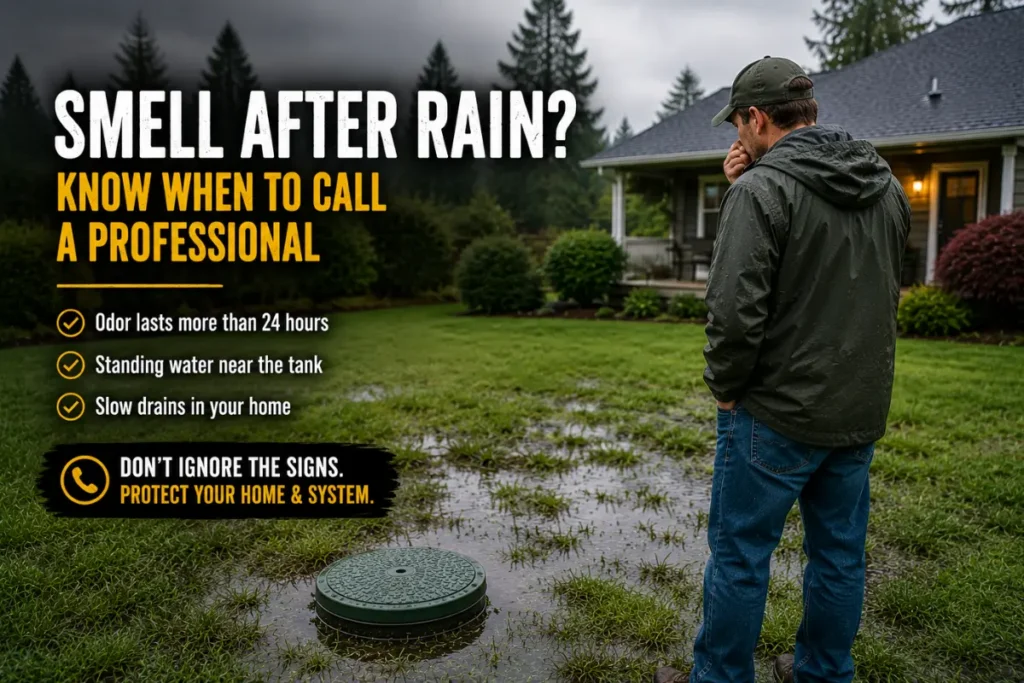
A mild odor immediately after a major storm is not always a reason to panic.
However, you should not ignore a septic smell that:
- Returns after every rainfall
- Lasts for several days
- Is accompanied by standing water
- Causes backups inside the home
- Continues to get worse over time
These are often signs that the system needs attention.
The sooner a problem is identified, the easier and less expensive it is usually to fix.
How to Prevent Septic Odors After Rain
While nobody can control the weather, there are several steps homeowners can take to reduce the risk of septic odors.
- Schedule routine septic tank pumping
- Have your system inspected regularly
- Keep vehicles off the drain field
- Direct roof runoff away from septic components
- Address minor septic issues before they become major repairs
- Avoid excessive water use during periods of heavy rainfall
Regular maintenance remains the best way to protect your septic system and avoid unexpected problems.
When to Schedule a Septic Inspection
If your septic system smells after every rainstorm, it is worth having the system evaluated by a professional.
A professional septic inspection can identify the source of the odor and determine whether the issue is related to maintenance, a failing drain field, excessive sludge buildup, or another septic system problem.
For homeowners throughout Pierce County, Thurston County, and King County, early action can help prevent costly repairs and extend the life of the system.